
West Africa’s Debt Trap: The Silent Storm That Could Reshape the Region
West African nations face a mounting debt crisis as soaring global interest rates, economic stagnation, and food and energy shocks threaten fiscal survival and social stability. Can urgent debt relief prevent a new lost decade, or will calls for market discipline risk political upheaval across the region?
The Emergence of West Africa’s Debt Crisis
In the bustling markets of Accra and across the oil-rich wetlands of the Niger Delta, a slow-burning financial storm is changing the region in ways that rarely reach global headlines. Governments in West Africa are struggling to pay back debts taken on during years of cheap credit, and the world’s rising interest rates have made those obligations far more costly. For many nations, the bill is now due at precisely the moment when economic growth has stalled, inflation is high, and people feel the squeeze on livelihoods and basic services.
- Post-pandemic stagnation and global shocks: The COVID-19 pandemic not only set back the region’s fragile growth but also triggered increases in government borrowing to fund health, infrastructure, and social support. On top of this, war-driven spikes in food and energy prices have strained public budgets and household incomes alike.
- Rising global interest rates: When major global economies lifted interest rates to tame inflation at home, the ripple effects hit West Africa hard. Servicing external debt now costs governments two or three times more than it did in 2020.
- Mounting fiscal pressure in key economies: Ghana’s cedi, once stable, has lost more than half its value since 2021, triggering higher import prices and eroding savings. Nigeria—Africa’s largest economy—has been forced to use dwindling foreign reserves just to stabilize its currency and keep essential energy subsidies going. Senegal, recently seen as a beacon of economic progress, is quietly postponing or scaling back ambitious infrastructure projects in a bid to stay afloat.
These dynamics have left budgets dangerously stretched. In some months, Nigeria spends over 90% of government revenue just servicing debt. The region’s ability to invest in future growth or supply basic services is under threat, and the path out is far from obvious.
Historical Parallels and New Dynamics in Debt Management
Today’s crisis is not without precedent. In the 1980s and 1990s, developing countries from Latin America to Africa faced their own debt reckoning, ultimately leading to “lost decades” of austerity, slow growth, and cycles of unrest. Then, as now, surging interest rates and currency shocks forced painful cutbacks.
- The speed of crisis: Unlike the past, today’s financial distress travels faster. Social media can carry images of empty pharmacies, protests, and hardship from Bamako to Berlin in seconds. This amplifies public pressure and complicates the crisis-management playbook.
- Changing creditor landscape: Where the International Monetary Fund (IMF) and World Bank dominated lending 40 years ago, today’s West African borrowers must also answer to private bondholders—investors and hedge funds with less patience for missed payments and little incentive for leniency. As a result, talks over relief or restructuring are more complex and less predictable.
- Risks of contagion: Political instability can now cross borders with an immediacy rarely seen before. Neighbors watch each other’s fiscal struggles and public unrest with growing concern, especially in coup-prone Sahel states.
The legacy of past adjustment programs hangs over the present. Regions forced into deep austerity in earlier crises often saw spikes in poverty, sharp drops in social spending, and protracted recovery. Yet with new actors and even greater speed, the stakes today may be even higher.
The Human and Political Cost of the Debt Crisis
While the narratives may revolve around macroeconomic indicators and currency charts, the effects of the current debt crisis play out in everyday life. For many in West Africa—where half the population is under 20—the crisis translates into shrinking social budgets and new barriers to opportunity.
- Healthcare and education under strain: Budget cuts have led to shortages of essentials, from malaria drugs to teacher salaries. Clinics run out of vital medicines. Classrooms grow more crowded as governments freeze or slash education spending. Such gaps in services threaten to undermine both long-term development and present-day stability.
- Soaring costs for the vulnerable: Currency deprecation pushes up the price of imported food staples and pharmaceuticals, placing particular pressure on low-income families who already spend much of their income on basics. Rice and medicine, once affordable, become occasional luxuries.
- Accelerant for unrest: West Africa’s “youth bulge” makes these trends especially volatile. High unemployment and reduced opportunities, coupled with digital networks that publicize government shortcomings in real time, create fertile ground for protest and, in some cases, political turbulence.
These are not merely technical setbacks: they risk fueling cycles of public anger, frustration, and even regime change. The lesson from previous crises is clear—when breadwinners can’t feed their families or get needed healthcare, economic debates can quickly become political emergencies.
Navigating the Dilemma: Debt Relief vs Market Discipline
The debate now raging among policymakers—from Washington to Abuja—boils down to a stark choice. Should lenders grant rapid debt relief and restructuring to avoid deepening social and political turmoil? Or should the priority remain strict market discipline, even at the risk of widespread hardship and instability?
- Arguments for urgent relief: Advocates warn that failing to ease the debt burden risks tipping millions into poverty, destabilizing fragile states, and triggering more protests or even conflict. Early and comprehensive restructuring, they argue, could prevent deeper crises and open space for renewed investment in growth.
- Arguments for market discipline: Critics of blanket debt relief cite “moral hazard”—the risk that leniency today encourages fiscal indiscipline tomorrow. They argue that maintaining tough conditions ensures countries cannot borrow recklessly and signals to future investors that contracts will be honored.
- Potential consequences: There is no easy answer. In Ghana, talks with foreign creditors have proven difficult, with private bondholders reluctant to accept losses. Nigeria continues to walk a fiscal tightrope, relying on risky subsidies while searching for a way to reduce dependence on external borrowing. Senegal’s infrastructure dreams could be among the early casualties of a more restrictive global climate.
For now, the balancing act is delicate: avoid a collapse in public order without undermining future access to capital. The stakes, however, go beyond spreadsheets. How West Africa’s debt crisis is handled—by both local governments and international lenders—will help shape the region’s trajectory for years, potentially influencing migration, security, and economic opportunity far beyond its borders.

🌍 How Countries Voted
See which countries are participating in this debate and where their votes currently lean.
Continue Reading
More Global Politics articles related to this topic.
 July 24, 2026
How the Ukraine-Russia War Has Boosted US Money Power by 2026: Unexpected Gains and Growing Risks
The Ukraine-Russia war has reshaped US economic and strategic power by 2026. From surging energy exports to growing defense contracts, America’s finan
July 24, 2026
How the Ukraine-Russia War Has Boosted US Money Power by 2026: Unexpected Gains and Growing Risks
The Ukraine-Russia war has reshaped US economic and strategic power by 2026. From surging energy exports to growing defense contracts, America’s finan
 June 18, 2026
Russia-India Rare Earths Pact: A Geopolitical Game-Changer in the Shadow of China’s Dominance
The Russia-India agreement on rare earth elements could challenge China’s global dominance in critical minerals, shifting technological and geopolitic
June 18, 2026
Russia-India Rare Earths Pact: A Geopolitical Game-Changer in the Shadow of China’s Dominance
The Russia-India agreement on rare earth elements could challenge China’s global dominance in critical minerals, shifting technological and geopolitic
 June 15, 2026
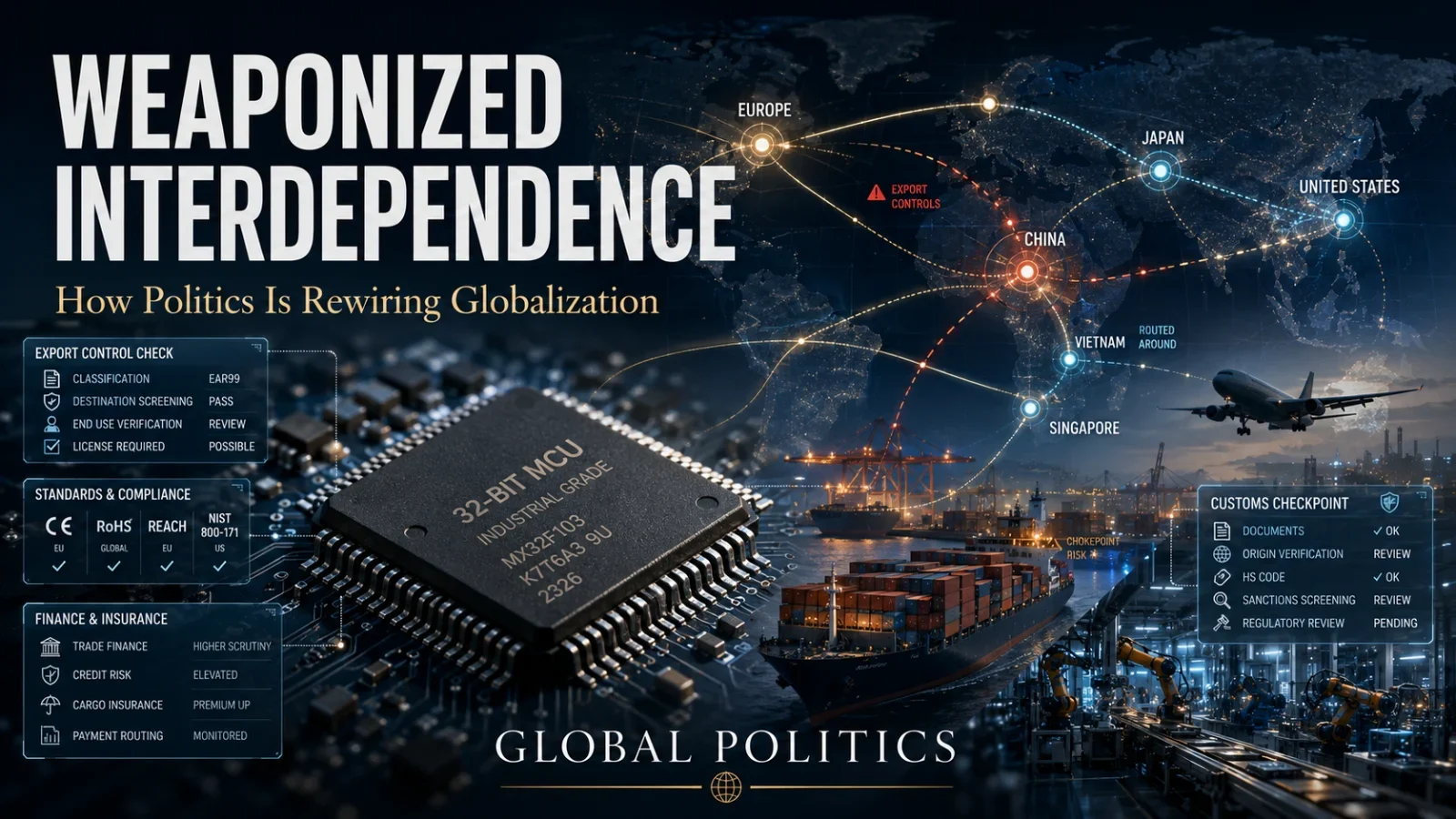
The Weaponization of Economic Interdependence: How States Are Rewiring Globalization
The article examines how states are transforming economic interdependence into strategic leverage by controlling key nodes in technology, finance, and
June 15, 2026
The Weaponization of Economic Interdependence: How States Are Rewiring Globalization
The article examines how states are transforming economic interdependence into strategic leverage by controlling key nodes in technology, finance, and
 June 13, 2026
The Global Race for Critical Minerals: Who Controls the Resources Powering the Green Revolution?
The scramble for lithium, cobalt, and rare earth elements has become a defining geopolitical contest of the 21st century. As nations strive for energy
June 13, 2026
The Global Race for Critical Minerals: Who Controls the Resources Powering the Green Revolution?
The scramble for lithium, cobalt, and rare earth elements has become a defining geopolitical contest of the 21st century. As nations strive for energy