
When Truth Has No Flag: How Contested Facts Heighten Global Social Pressure in 2026
In 2026, the battle over what is true is crossing borders and deepening divides worldwide. As facts become contested territory, societies face growing pressure to find shared ground or risk more conflict.
When Truth Crosses Borders: The Idea That Facts Belong to No Flag
Truth should be universal. It’s meant to stand above national identities or political groups. However, today many societies claim a "their version" of the truth, shaped by culture, ideology, or power. This claim often deepens divisions, undermines trust, and blocks global cooperation.
Truth is a universal value that should not be confined or claimed by any single nation or political group.
We see this in contests over historical narratives. Some countries dispute common understandings of wars or events, each arguing their story is the true one. Media in conflict zones often spin facts to favor one side. Social media amplifies these biases, creating echo chambers where communities live in different realities.
Such fractured truths make global understanding difficult. When countries and groups cannot agree on basic facts, diplomacy suffers. Cooperation on urgent issues like climate or health risks falters.
Why this matters: Dividing truth by flags weakens trust and global problem-solving just when we need it most.
The Pressure Cooker: Societal Stress from Contested Truths
Disputed truths don’t just confuse politics. They stress societies intensely. Misinformation or selective facts deepen divides and spark conflict within communities. People retreat into echo chambers where they only face ideas that confirm their beliefs.
Contested facts fuel polarization and social pressure, threatening democratic debate and social cohesion.
This division hurts democratic processes. When election results or public health advice become disputed facts, trust frays. Social fabric weakens, and individuals face psychological strain as they struggle to find common ground or simply what to believe.
Technology speeds up this pressure. Algorithms feed biases, sharpening echo chambers. The result is a feedback loop of increasing tension and polarizing identities.
Why this matters: Societies under pressure from contested facts risk fracturing beyond repair, affecting peace and governance.
Toward a Common Ground: Can Societies Embrace Shared Truths?
Rebuilding trust around shared truths is tough but essential. Education plays a key role by teaching critical thinking and media literacy to spot misinformation. Journalists and media outlets bear ethical duties to report fairly and check facts.
Education, ethical journalism, and inclusive dialogue are vital to recognizing shared truths in divided societies.
Community dialogue programs that include multiple perspectives foster understanding. Innovations in transparent fact-checking help people verify information independently. These steps can chip away at the walls created by contested truths.
Global initiatives promoting media literacy and nonpartisan fact review show promise. Yet these efforts require broad commitment and ongoing effort against political and social pressures favoring division.
Why this matters: Successfully embracing shared truths can heal societal rifts and strengthen democracy.
The Global Impact: Why the Fight Over Truth Matters Everywhere
The struggle over truth is not just local. It shapes international relations, peace, and global efforts. Diplomatic tensions rise when countries clash over facts or narratives. Humanitarian missions can be hampered by propaganda or misinformation that misleads aid distribution.
Disputes over truth risk escalating mistrust and fragmentation on the global stage.
UN campaigns to combat misinformation during crises show that truth matters deeply in international law and norms. Yet propaganda and disinformation continue to poison cross-border peace talks. Without agreed facts, global cooperation falters just as crises grow increasingly complex and interconnected.
Why this matters: A universal approach to truth strengthens global stability and cooperation essential for our shared future.
What to watch next
Keep an eye on the 2026 Global Summit on Media Literacy, planned to launch new international cooperation on combating misinformation and promoting ethical journalism.
Watch how rising political campaigns in several key countries handle disputed facts leading up to elections, a stress test for society’s trust in truth.
Question for readers: It is unrealistic to seek a universal truth free from national or ideological bias because truth is inherently tied to culture and politics.

🌍 How Countries Voted
See which countries are participating in this debate and where their votes currently lean.
Continue Reading
More Global Politics articles related to this topic.
 June 19, 2026
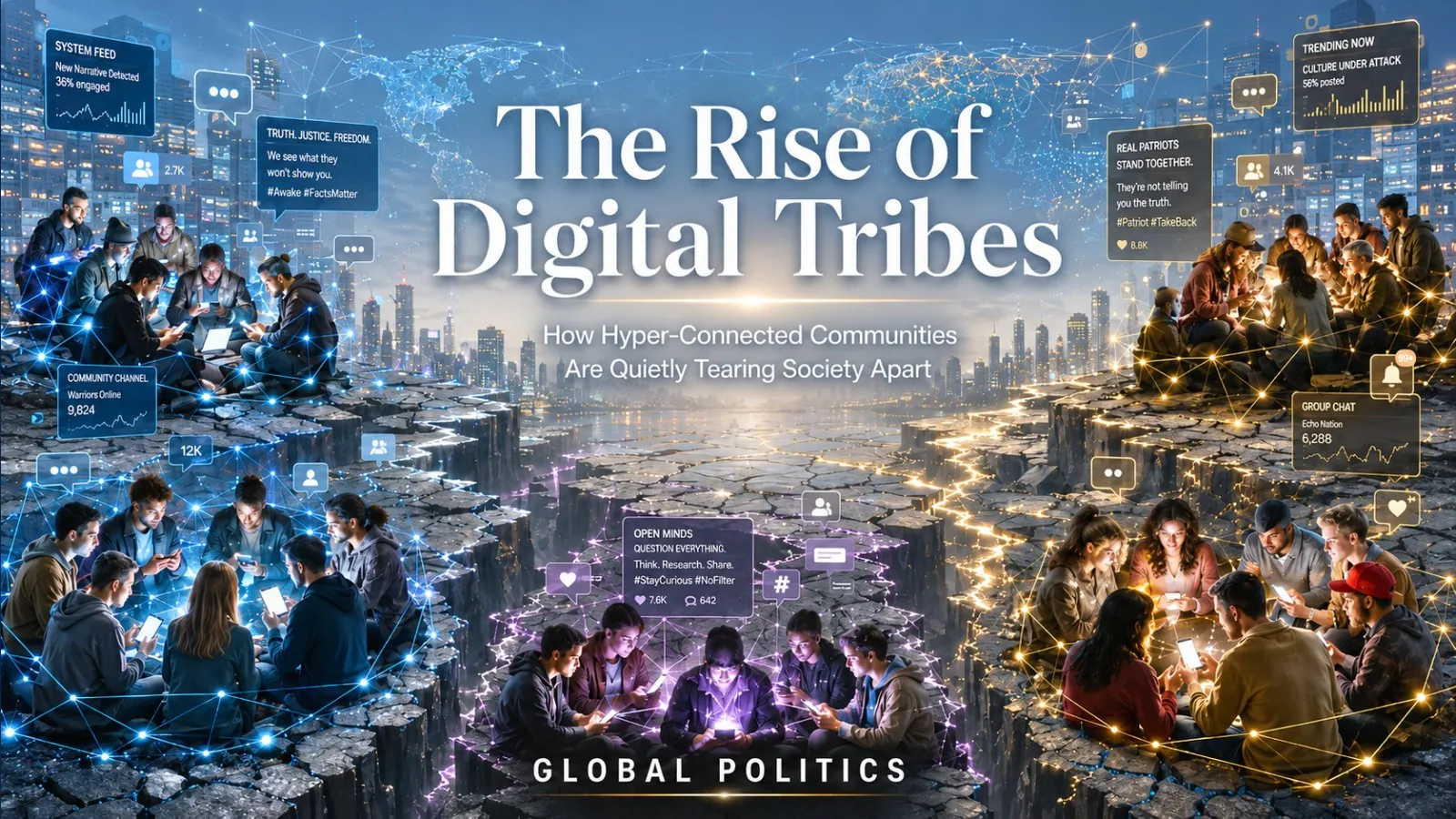
The Rise of Digital Tribes: How Hyper-Connected Communities Are Quietly Tearing Society Apart
Digital tribes, forged in online spaces, unite millions by shared interests and identities but also deepen social fractures. This article explores how
June 19, 2026
The Rise of Digital Tribes: How Hyper-Connected Communities Are Quietly Tearing Society Apart
Digital tribes, forged in online spaces, unite millions by shared interests and identities but also deepen social fractures. This article explores how
 July 28, 2026
The Illusion of Consensus on Ukraine in 2026: How Fake Engagement Shapes Global Opinion
Fake social media engagement creates a false sense of agreement on Ukraine-related issues worldwide. This digital deception distorts public opinion an
July 28, 2026
The Illusion of Consensus on Ukraine in 2026: How Fake Engagement Shapes Global Opinion
Fake social media engagement creates a false sense of agreement on Ukraine-related issues worldwide. This digital deception distorts public opinion an
 July 24, 2026
Hungary’s Rising Social Pressures Under Péter Magyar: Broken Promises and Growing Strains in 2026
Since taking office, Péter Magyar’s government has struggled to deliver on bold promises, deepening economic and social pressures in Hungary. From sta
July 24, 2026
Hungary’s Rising Social Pressures Under Péter Magyar: Broken Promises and Growing Strains in 2026
Since taking office, Péter Magyar’s government has struggled to deliver on bold promises, deepening economic and social pressures in Hungary. From sta
 June 10, 2026
What If Every Decision Made Out of Fear Was Wrong? Rethinking How We Choose
This article examines how fear often unconsciously drives everyday decisions, leading to missed opportunities and subtle regrets, and suggests shiftin
June 10, 2026
What If Every Decision Made Out of Fear Was Wrong? Rethinking How We Choose
This article examines how fear often unconsciously drives everyday decisions, leading to missed opportunities and subtle regrets, and suggests shiftin