
The Global Race for Critical Minerals: Who Controls the Resources Powering the Green Revolution?
The scramble for lithium, cobalt, and rare earth elements has become a defining geopolitical contest of the 21st century. As nations strive for energy security and technological dominance, who will control the resources central to the green revolution—and at what global cost?
The Rising Demand for Critical Minerals in the Green Transition
The global push for cleaner, more sustainable energy has unleashed an unprecedented demand for certain raw materials—lithium, cobalt, and rare earth elements among them. These are known as critical minerals not because they are rare in nature, but because they are essential for high-tech and low-carbon technologies, and their supplies are often vulnerable to disruption.
These minerals form the backbone of the green revolution. Lithium and cobalt, for example, are vital for rechargeable batteries powering electric vehicles (EVs), smartphones, and grid-scale storage. Rare earth elements are used in the magnets for wind turbines and in countless digital devices.
As governments and industries worldwide pledge to phase out fossil fuels, the need for these resources has soared. The International Energy Agency predicts that mineral demand could quadruple by 2040 if countries meet their climate targets. To keep up, mining of lithium in South American salt flats has expanded dramatically, and rare earth mining feeds the wind and solar boom. But this scramble for minerals is more than just economic—it is rapidly becoming a matter of national security and global influence.
Key Players and Supply Chain Dynamics in the Global Mineral Race
The race for critical minerals interlinks geology, technology, and geopolitics in complex ways. While deposits may be scattered globally, the ability to process these minerals heavily influences who holds real power.
Currently, China dominates the processing and refining of most critical minerals. For example, although rare earth elements are mined in several countries, over 80% of global processing capacity is based in China. This dominance gives China substantial leverage over supply chains vital to high-tech manufacturing and green energy in other countries.
Resource-rich nations in Africa, such as the Democratic Republic of Congo (which produces over half of the world’s cobalt), and South American countries like Chile, Argentina, and Bolivia (key lithium suppliers), find themselves increasingly courted and pressured by global powers. Australia, with vast reserves of multiple minerals and political alignment with the U.S. and EU, is positioning itself as a strategic counterweight.
Meanwhile, the United States, European Union, and other nations have launched policies to reduce their dependence on dominant players. The U.S. and Australia are increasing investments in domestic mining and refining; the EU is funding projects and pursuing overseas partnerships to diversify sources.
Multinational mining corporations and global financial institutions also shape these supply chains, investing in new mines or infrastructure—sometimes provoking local resistance or international concern over governance, transparency, and environmental standards.
Economic, Environmental, and Social Implications of the Mineral Boom
The rush to extract and process critical minerals brings opportunity—and risk. For many countries, resource booms promise jobs, revenue, and development. Yet history shows that these gains can be fleeting. Resource-driven regions often experience boom-bust cycles: initial prosperity followed by volatility, economic dependence, or even collapse when prices shift or resources run out.
Environmental costs are a major concern. Mining lithium from South America’s salt flats, for example, requires enormous volumes of water, threatening fragile local ecosystems. Cobalt mining in the Democratic Republic of Congo has raised global attention for its links to toxic pollution, unsafe working conditions, and reports of child labor.
Communities near new and expanded mines may gain employment but can also suffer displacement, land loss, or contaminated water supplies. These social tensions can feed broader dissatisfaction and resistance, complicating efforts to secure needed minerals—or to ensure benefits are equitably shared.
Global reliance on a small number of resource providers introduces new forms of dependency. As past oil crises demonstrated, disruptions—whether from trade disputes, export bans, or conflict—can send shockwaves through entire economies.
Geopolitical Strategies and the Debate on Securing Mineral Sovereignty
The scramble for critical minerals revives fears of resource insecurity and energy dependence, echoing the oil crises and resource rivalries of the 20th century. Today, many governments argue that securing mineral sovereignty—through nationalization, direct investment, or aggressive industrial policy—is essential to protect national interests and guarantee energy stability.
The U.S., EU, and others are invoking resource nationalism, setting aside free-trade ideals to stockpile reserves, subsidize domestic production, or restrict exports in times of shortage. China itself has implemented export controls on rare earth elements, while amassing strategic reserves to shield its own industries.
Supporters of resource nationalism claim that relying on global markets or unfriendly suppliers is a dangerous vulnerability—particularly as green technology underpins not just the energy system, but military and economic power. They argue that direct domestic control, even at the cost of higher prices, is the only path to true security.
Critics warn that this path risks fragmenting global supply chains, sparking new trade wars, and perpetuating cycles of rivalry and distrust just as cooperation is needed to address climate change. Others argue for multinational partnerships, recycling initiatives, and international standards to spread risk and minimize conflict—but admit these solutions require delicate diplomacy and unprecedented trust.
The world stands at a crossroads: Will the drive for resource security spark new forms of global rivalry, or can nations find common ground to sustain both the energy transition and geopolitical stability?

🌍 How Countries Voted
See which countries are participating in this debate and where their votes currently lean.
Continue Reading
More Global Politics articles related to this topic.
 June 18, 2026
Russia-India Rare Earths Pact: A Geopolitical Game-Changer in the Shadow of China’s Dominance
The Russia-India agreement on rare earth elements could challenge China’s global dominance in critical minerals, shifting technological and geopolitic
June 18, 2026
Russia-India Rare Earths Pact: A Geopolitical Game-Changer in the Shadow of China’s Dominance
The Russia-India agreement on rare earth elements could challenge China’s global dominance in critical minerals, shifting technological and geopolitic
 July 24, 2026
How the Ukraine-Russia War Has Boosted US Money Power by 2026: Unexpected Gains and Growing Risks
The Ukraine-Russia war has reshaped US economic and strategic power by 2026. From surging energy exports to growing defense contracts, America’s finan
July 24, 2026
How the Ukraine-Russia War Has Boosted US Money Power by 2026: Unexpected Gains and Growing Risks
The Ukraine-Russia war has reshaped US economic and strategic power by 2026. From surging energy exports to growing defense contracts, America’s finan
 June 15, 2026
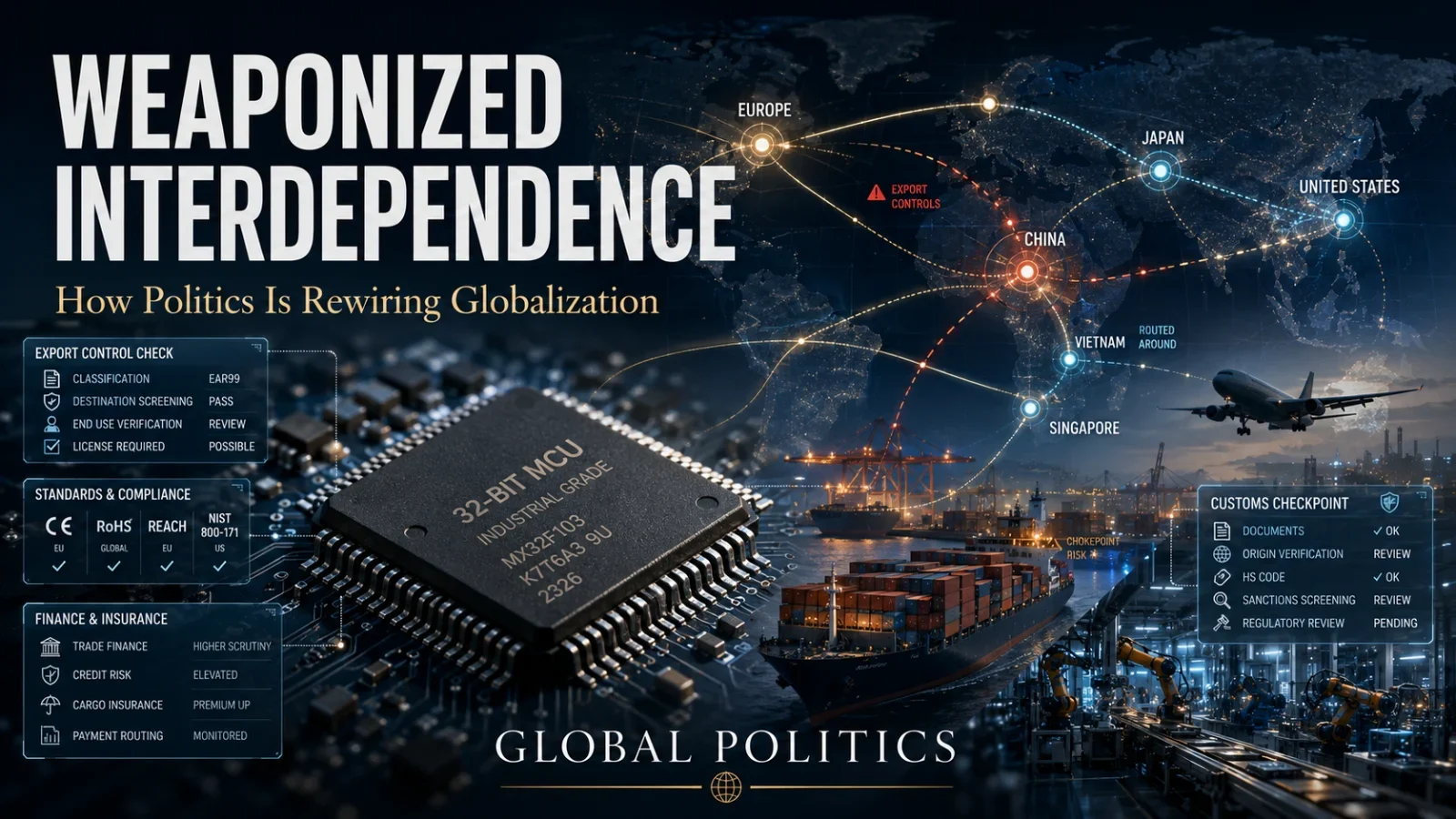
The Weaponization of Economic Interdependence: How States Are Rewiring Globalization
The article examines how states are transforming economic interdependence into strategic leverage by controlling key nodes in technology, finance, and
June 15, 2026
The Weaponization of Economic Interdependence: How States Are Rewiring Globalization
The article examines how states are transforming economic interdependence into strategic leverage by controlling key nodes in technology, finance, and
 June 10, 2026
West Africa’s Debt Trap: The Silent Storm That Could Reshape the Region
West African nations face a mounting debt crisis as soaring global interest rates, economic stagnation, and food and energy shocks threaten fiscal sur
June 10, 2026
West Africa’s Debt Trap: The Silent Storm That Could Reshape the Region
West African nations face a mounting debt crisis as soaring global interest rates, economic stagnation, and food and energy shocks threaten fiscal sur