
Russia-India Rare Earths Pact: A Geopolitical Game-Changer in the Shadow of China’s Dominance
The Russia-India agreement on rare earth elements could challenge China’s global dominance in critical minerals, shifting technological and geopolitical landscapes amid rising supply chain tensions.
Why Rare Earth Elements Are More Than Just Minerals
Rare earth elements (REEs) are crucial but often overlooked drivers of today’s technology and defense industries. Despite their misleading name, these 17 metallic elements are relatively abundant in the Earth's crust. Their rarity lies in the economic and technological challenges of extraction and refining.
REEs are embedded in the cutting-edge components of smartphones, electric vehicles, wind turbines, and missile guidance systems — making them linchpins of the modern world. However, the global supply chain is dramatically skewed: China controls roughly 80% of rare earth refining and a dominant share of exports, giving it substantial leverage over global prices and availability.
This dominance became visible in 2010 when China restricted rare earth exports during a diplomatic dispute, sparking worldwide fears over supply vulnerabilities. Since then, countries have scrambled to diversify sources, recognizing that rare earths are strategic assets in technology development and military capabilities.
In this context, the Russia-India rare earth pact emerges as a bold move to break China’s near-monopoly, with implications far beyond mineral markets.
Inside the Russia-India Rare Earths Pact: Strategic Diversification in Action
The new pact between Russia and India aims at joint exploration, mining, and processing of rare earth elements. This partnership capitalizes on Russia’s vast, relatively untapped mineral deposits and India’s growing demand and ambitions to develop its domestic processing capacities.
Strategically, this collaboration offers both countries a pathway to reduce their dependence on Chinese rare earth supplies, boosting economic security and increasing geopolitical influence. India, aspiring to become a technology and manufacturing hub, sees access to secure and diversified REE supplies as vital. Russia, facing western sanctions, is eager to deepen ties with Asian partners and leverage its natural resources for geopolitical positioning.
Previously, Russia and India have collaborated extensively in energy and defense sectors, building trust and institutional frameworks that can now be applied to rare earth cooperation. India’s recent policy initiatives underscore a clear intent to foster rare earth processing capabilities domestically, aiming to capture more value within the supply chain rather than remain a buyer of refined products.
How This Pact Reconfigures the Geopolitical Landscape Around China’s Dominance
The pact represents a significant geopolitical challenge to China’s control over rare earths. By creating alternative supply routes, Russia and India potentially dilute China’s ability to use rare earths as leverage in global disputes.
This trend fits within a broader pattern: the United States, European Union, Japan, and Australia are also pushing to diversify their critical mineral sources and build resilient supply chains. These moves collectively signal a strategic recalibration with China’s supply dominance as the central vulnerability.
China has historically leveraged its rare earth monopoly for political bargaining and economic pressure, a tactic feared by many nations reliant on these minerals for their technological edge. The new Russia-India alliance may accelerate the intensifying race in Asia for technological superiority and military modernization, reshaping regional power balances.
The consequences could extend beyond supply chains, influencing diplomatic alignments, economic partnerships, and security architectures across Asia and globally.
What This Means For You: Technology, Security, and Global Markets
For consumers and industries worldwide, diversified rare earth supplies could translate into more stable prices and less risk of disruptive shortages that cascade through high-tech sectors. Electric vehicle manufacturers, renewable energy developers, and defense contractors all stand to benefit from a more secure and competitive market.
Broader access to rare earths might spur innovation by lowering input bottlenecks and encouraging alternative technologies. Conversely, the emergence of multiple competing supply blocs could heighten geopolitical tensions, risking trade conflicts or resource nationalism.
Resource access is increasingly linked to national security policies. Countries realize that critical minerals are not mere commodities but strategic assets integral to sovereignty and technological leadership.
Technology slowdowns or price spikes caused by rare earth shortages in the past underline how supply vulnerabilities affect everyday products and future industries alike.
The Road Ahead: Opportunities, Risks, and Global Dialogue
Looking forward, this Russia-India agreement may inspire other countries to form partnerships aiming to dilute China’s rare earth dominance. However, there are inherent risks: escalating resource nationalism could fragment global markets or provoke diplomatic flare-ups over access and control.
On the positive side, cooperative frameworks and transparent resource management—like global extractive industry initiatives—could pave the way for stability and shared benefits.
History shows that shifts in resource power balances, such as the oil market transformations throughout the 20th century, have the potential to reorder international relations profoundly. The rare earth contest promises similar stakes, urging a dialogue that balances national ambitions against the realities of global interdependence.
As geopolitical games unfold over elements invisible in our smartphones but indispensable in our lives, the question remains: will this new pact mark a durable realignment in global supply chains, or will it deepen divides without securing stable alternatives? The answer will shape not just trade routes, but the future of technology and power worldwide.
Join the Debate
The Russia-India collaboration on rare earth elements is about more than minerals; it is a strategic pivot with global consequences. It invites a crucial conversation on how access to critical resources will define alliances, competition, and stability in the years ahead.

🌍 How Countries Voted
See which countries are participating in this debate and where their votes currently lean.
Continue Reading
More Global Politics articles related to this topic.
 June 13, 2026
The Global Race for Critical Minerals: Who Controls the Resources Powering the Green Revolution?
The scramble for lithium, cobalt, and rare earth elements has become a defining geopolitical contest of the 21st century. As nations strive for energy
June 13, 2026
The Global Race for Critical Minerals: Who Controls the Resources Powering the Green Revolution?
The scramble for lithium, cobalt, and rare earth elements has become a defining geopolitical contest of the 21st century. As nations strive for energy
 July 24, 2026
How the Ukraine-Russia War Has Boosted US Money Power by 2026: Unexpected Gains and Growing Risks
The Ukraine-Russia war has reshaped US economic and strategic power by 2026. From surging energy exports to growing defense contracts, America’s finan
July 24, 2026
How the Ukraine-Russia War Has Boosted US Money Power by 2026: Unexpected Gains and Growing Risks
The Ukraine-Russia war has reshaped US economic and strategic power by 2026. From surging energy exports to growing defense contracts, America’s finan
 June 15, 2026
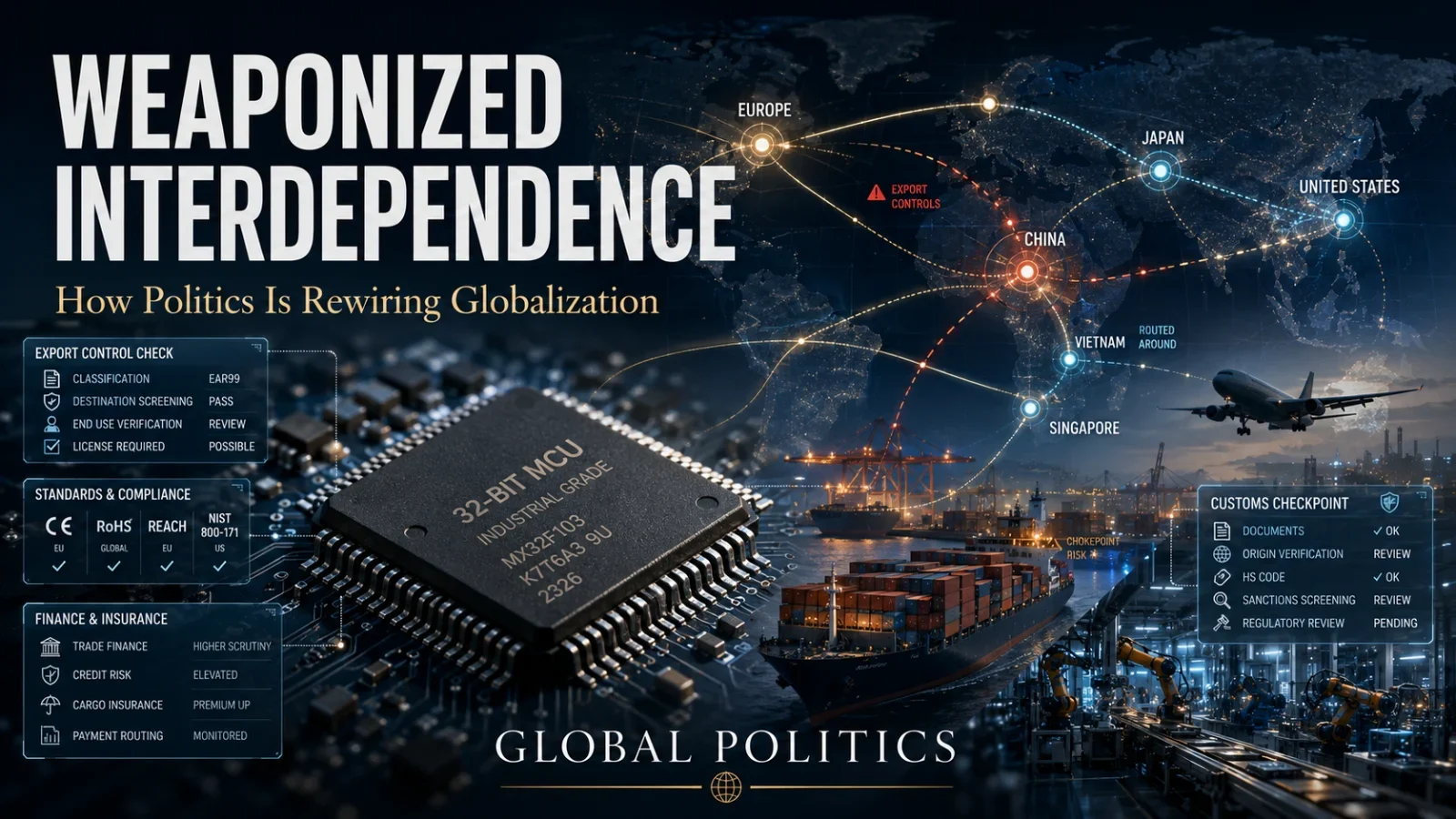
The Weaponization of Economic Interdependence: How States Are Rewiring Globalization
The article examines how states are transforming economic interdependence into strategic leverage by controlling key nodes in technology, finance, and
June 15, 2026
The Weaponization of Economic Interdependence: How States Are Rewiring Globalization
The article examines how states are transforming economic interdependence into strategic leverage by controlling key nodes in technology, finance, and
 June 10, 2026
West Africa’s Debt Trap: The Silent Storm That Could Reshape the Region
West African nations face a mounting debt crisis as soaring global interest rates, economic stagnation, and food and energy shocks threaten fiscal sur
June 10, 2026
West Africa’s Debt Trap: The Silent Storm That Could Reshape the Region
West African nations face a mounting debt crisis as soaring global interest rates, economic stagnation, and food and energy shocks threaten fiscal sur