
The Fragmentation of Society: How Digital Tribes Disrupt Global Social Cohesion
Social media platforms have altered more than just how we connect—they are reshaping the very fabric of global societies by fostering digital tribes. This transformation challenges traditional social cohesion and raises fundamental questions about identity, unity, and the future of shared public life.
Digital Tribes: The New Social Factions
Social media platforms, designed to connect, often do the paradoxical: they divide. By enabling people to cluster around shared interests, beliefs, or identities online, these platforms create "digital tribes"—groups bonded more by ideology and affinity than geographic or civic ties. Unlike traditional community structures, these online affiliations can be fluid yet fiercely insular, reinforcing echo chambers and fragmenting public discourse.
Rather than public squares that accommodate diverse voices, social networks often become gated communities where algorithmic curation privileges content that deepens in-group identity at the rejection of 'others.' This has profound implications for the idea of social cohesion, which depends on overlapping memberships and mutual understanding across different groups.
Why Social Cohesion Matters Now More Than Ever
Social cohesion—the glue that binds a society—is crucial for stability, democratic governance, and collective action. It encompasses trust among citizens, shared values, and the ability to negotiate differences constructively. As societies face pressing global challenges like climate change, migration, and economic inequality, the need for broad-based cooperation has never been greater.
If digital tribes pull people away from common ground into partisan or cultural silos, the capacity for consensus erodes. Polarization intensifies, social trust declines, and political institutions grow brittle. These tendencies risk disrupting democratic processes and weaken the social fabric that sustains resilience and progress.
The Wider Consequences: From Local Communities to Global Relations
The fragmentation wrought by digital tribalism is not confined to isolated online debates. It bleeds into real-world politics, fueling identity-driven conflicts and making compromise more elusive. Populations divided into mutually suspicious camps can be more easily manipulated by demagogues and exploited through misinformation campaigns.
On the international stage, these internal fractures influence diplomatic postures and economic cooperation. Societies that cannot maintain internal cohesion struggle to project stable foreign policies or collaborate effectively on global issues.
Prospects and Pathways for Rebuilding Cohesion
Recognizing the challenge is the first step toward solutions. Some propose redesigning social media algorithms to promote diverse perspectives and reduce divisive content. Others emphasize digital literacy to empower users to navigate online spaces critically.
Encouraging cross-tribal dialogue in digital and physical spaces
Promoting civic education that fosters pluralism
Regulatory frameworks that balance free expression with social responsibility
While none of these are silver bullets, combined efforts can help societies adapt to the digital age without fracturing irreparably.
Encouraging Global Debate on Digital Tribalism and Social Unity
The tension between digital tribalism and social cohesion confronts us all. It challenges how we conceive identity, community, and democracy in an interconnected world. Does the rise of digital tribes mark the decline of unified societies, or is this a natural evolution toward new forms of association? Where should societies draw lines between freedom of digital association and the need for common bonds?
Understanding the dynamics at play opens the door for informed debate about whether and how social cohesion can be restored or reimagined in a digitally fragmented world.

🌍 How Countries Voted
See which countries are participating in this debate and where their votes currently lean.
Continue Reading
More Global Politics articles related to this topic.
 August 1, 2026
When Truth Has No Flag: How Contested Facts Heighten Global Social Pressure in 2026
In 2026, the battle over what is true is crossing borders and deepening divides worldwide. As facts become contested territory, societies face growing
August 1, 2026
When Truth Has No Flag: How Contested Facts Heighten Global Social Pressure in 2026
In 2026, the battle over what is true is crossing borders and deepening divides worldwide. As facts become contested territory, societies face growing
 July 28, 2026
The Illusion of Consensus on Ukraine in 2026: How Fake Engagement Shapes Global Opinion
Fake social media engagement creates a false sense of agreement on Ukraine-related issues worldwide. This digital deception distorts public opinion an
July 28, 2026
The Illusion of Consensus on Ukraine in 2026: How Fake Engagement Shapes Global Opinion
Fake social media engagement creates a false sense of agreement on Ukraine-related issues worldwide. This digital deception distorts public opinion an
 July 24, 2026
Hungary’s Rising Social Pressures Under Péter Magyar: Broken Promises and Growing Strains in 2026
Since taking office, Péter Magyar’s government has struggled to deliver on bold promises, deepening economic and social pressures in Hungary. From sta
July 24, 2026
Hungary’s Rising Social Pressures Under Péter Magyar: Broken Promises and Growing Strains in 2026
Since taking office, Péter Magyar’s government has struggled to deliver on bold promises, deepening economic and social pressures in Hungary. From sta
 June 19, 2026
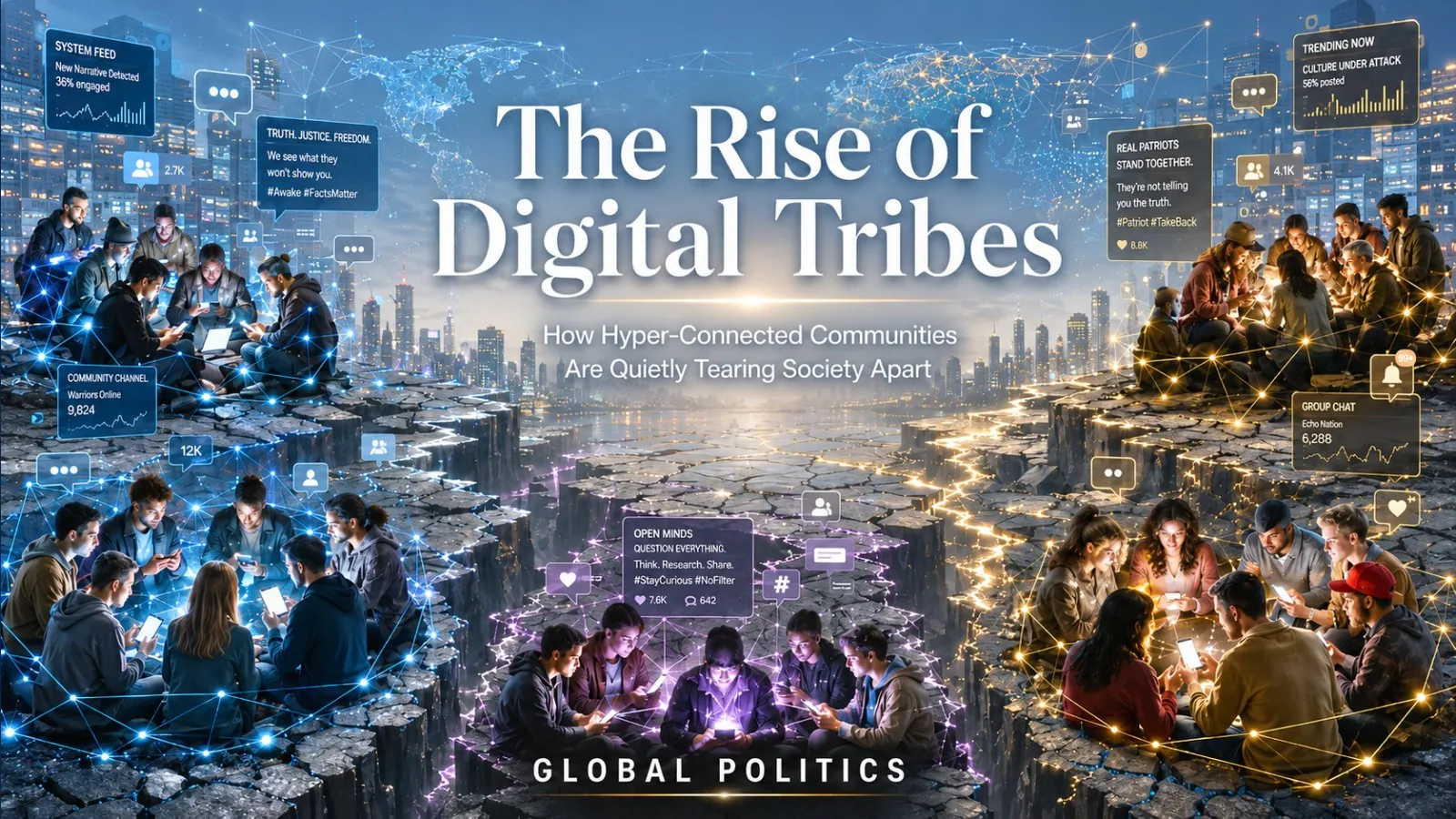
The Rise of Digital Tribes: How Hyper-Connected Communities Are Quietly Tearing Society Apart
Digital tribes, forged in online spaces, unite millions by shared interests and identities but also deepen social fractures. This article explores how
June 19, 2026
The Rise of Digital Tribes: How Hyper-Connected Communities Are Quietly Tearing Society Apart
Digital tribes, forged in online spaces, unite millions by shared interests and identities but also deepen social fractures. This article explores how