
The Minimalism Pushback: Who Is ‘Less Is More’ Really For?
Minimalism is celebrated as liberating, but critics argue it's built on privilege and may ignore the realities and values of the global majority.
The Rise of Minimalism and Its Global Appeal
Minimalism is no longer just a design aesthetic—it has become a full-blown lifestyle movement. At its core, minimalism is about intentionally owning fewer possessions, pursuing simplicity, and focusing on what matters most. Digital platforms, influencers, and global brands have rapidly propelled the minimalist ideal across borders. Hashtags like #minimalisthome or #declutteredlife attract millions of followers, while bestselling books promise a calmer, more meaningful existence.
Proponents pitch minimalism as a pathway to mental clarity, sustainability, financial freedom, and autonomy from consumer culture. The approach resonates particularly in affluent, urban, and Western settings—where accumulation is no longer novel, and the luxury of choice makes owning less possible, even desirable. Companies have capitalized on this trend, marketing everything from capsule wardrobes to barely-there furniture collections as tickets to a better life.
- Social media channels depict minimalist living as aspirational, with curated spaces and carefully edited possessions.
- Brands and lifestyle coaches monetize e-courses and objects that fit the pared-down minimalist ideal.
In embracing minimalism, the promise is clear: less clutter outside equals less chaos within. Yet as this idea spreads, deeper questions about its inclusivity and relevancy worldwide are surfacing.
Critiques and Pushback: When ‘Less Is More’ Excludes the Many
As minimalist messages proliferate, so do critical voices. Skeptics point out that for millions, owning less is neither a radical choice nor a self-improvement strategy—it is a lived necessity born of economic scarcity or structural inequality. Minimalism, rebranded through Western or upper-middle-class lenses, can appropriate and commercialize what were once survival tactics or imposed limitations. For many families in the Global South or in working-class settings, ‘making do with little’ is a matter of pragmatism, not philosophy.
This critique goes deeper than economics. In cultures where abundance—expressed in food, family gatherings, multi-generational living, or vibrant decor—is a cherished value, the minimalist ideal may appear alien or even dismissive. The celebration of sparse interiors or solitary living can erase forms of togetherness and identity rooted in sharing, tradition, and collective memory.
- The focus on downsizing and decluttering can marginalize people whose circumstances provide no surplus to shed—or whose cultures find joy in abundance rather than restraint.
- Influencers and brands tout simplicity and minimal consumption as hip choice while continuing to benefit from the very marketplace they critique.
Critics also warn that the aspirational frame of minimalism risks excluding anyone who does not, or cannot, fit its intentionally vacant mold. The result: not liberation from consumerism, but a new kind of social pressure—one that presumes access to the luxury of less.
Historical and Social Dimensions: Minimalism in a Broader Context
The minimalist impulse is not new. History offers earlier waves of deliberate simplicity, from Buddhist monks renouncing possessions to 19th-century utopian movements in the West. Monastic orders across Christianity, Buddhism, and other faiths have long associated material restraint with spiritual growth, contrasting worldly excess with inner calm. The voluntary simplicity movements of the 20th century also questioned consumer culture, seeking more meaningful lives through less materialism.
But context matters. Traditionally, such movements have emerged among those with the power to renounce, often as a reaction to specific anxieties of their era—spiritual malaise, economic overreach, or social change. Today, minimalist branding can inadvertently reinforce class divides by distinguishing those who choose simplicity from those who have no alternative. In a globalized economy marked by vast consumption gaps, one person’s path to serenity may be another’s daily struggle for subsistence.
- Modern NGOs and some urban planners embrace minimalism for its promises of sustainability, seeking smaller ecological footprints and less waste.
- Meanwhile, non-Western and marginalized groups risk being excluded as lifestyle narratives shift toward ever-narrower ideals.
The debate is not just about aesthetics, but access and identity. Lifestyle choices framed as moral or personal fail to account for the economic, political, and cultural complexity of a diverse planet. Worse, they can further alienate those already on the margins of global consumption—and deepen the inequalities minimalism seeks to critique.
Navigating the Debate: Is Modern Minimalism Universal or Privileged?
Is there a version of minimalism that transcends privilege? Advocates argue that the core values—mindful consumption, intentional living, environmental care—can empower anyone to escape from the grip of materialism. In theory, such values are universally relevant, especially as the planet faces ecological limits and many struggle with mental overwhelm.
Yet, the lived reality challenges this optimism. If owning less is only celebrated when it is a choice—and marketed to those with plenty to begin with—does minimalism become just another badge of status? Voices from communities that do not see their histories or needs reflected in the minimalist narrative call for a more inclusive, humble conversation. Rather than dictating what “enough” means, perhaps the question is who gets to decide—and whose stories are centered when global trends cross borders.
- Cultural critics point out the danger of framing minimalism as the moral high ground, rather than one option among many diverse traditions of living well.
- Sustainability organizations increasingly emphasize adaptable, inclusive approaches that learn from varied global practices instead of prescribing a single model.
Minimalism’s next chapter may depend on its willingness to move beyond “less is more” as a universal cure, and towards a dialogue that respects abundance alongside restraint, history alongside trend, and necessity alongside choice.
Which vision will guide the future of this influential lifestyle: an open philosophy for all, or an exclusive brand for the few?

🌍 How Countries Voted
See which countries are participating in this debate and where their votes currently lean.
Continue Reading
More Global Politics articles related to this topic.
 August 1, 2026
When Truth Has No Flag: How Contested Facts Heighten Global Social Pressure in 2026
In 2026, the battle over what is true is crossing borders and deepening divides worldwide. As facts become contested territory, societies face growing
August 1, 2026
When Truth Has No Flag: How Contested Facts Heighten Global Social Pressure in 2026
In 2026, the battle over what is true is crossing borders and deepening divides worldwide. As facts become contested territory, societies face growing
 July 28, 2026
The Illusion of Consensus on Ukraine in 2026: How Fake Engagement Shapes Global Opinion
Fake social media engagement creates a false sense of agreement on Ukraine-related issues worldwide. This digital deception distorts public opinion an
July 28, 2026
The Illusion of Consensus on Ukraine in 2026: How Fake Engagement Shapes Global Opinion
Fake social media engagement creates a false sense of agreement on Ukraine-related issues worldwide. This digital deception distorts public opinion an
 July 24, 2026
Hungary’s Rising Social Pressures Under Péter Magyar: Broken Promises and Growing Strains in 2026
Since taking office, Péter Magyar’s government has struggled to deliver on bold promises, deepening economic and social pressures in Hungary. From sta
July 24, 2026
Hungary’s Rising Social Pressures Under Péter Magyar: Broken Promises and Growing Strains in 2026
Since taking office, Péter Magyar’s government has struggled to deliver on bold promises, deepening economic and social pressures in Hungary. From sta
 June 19, 2026
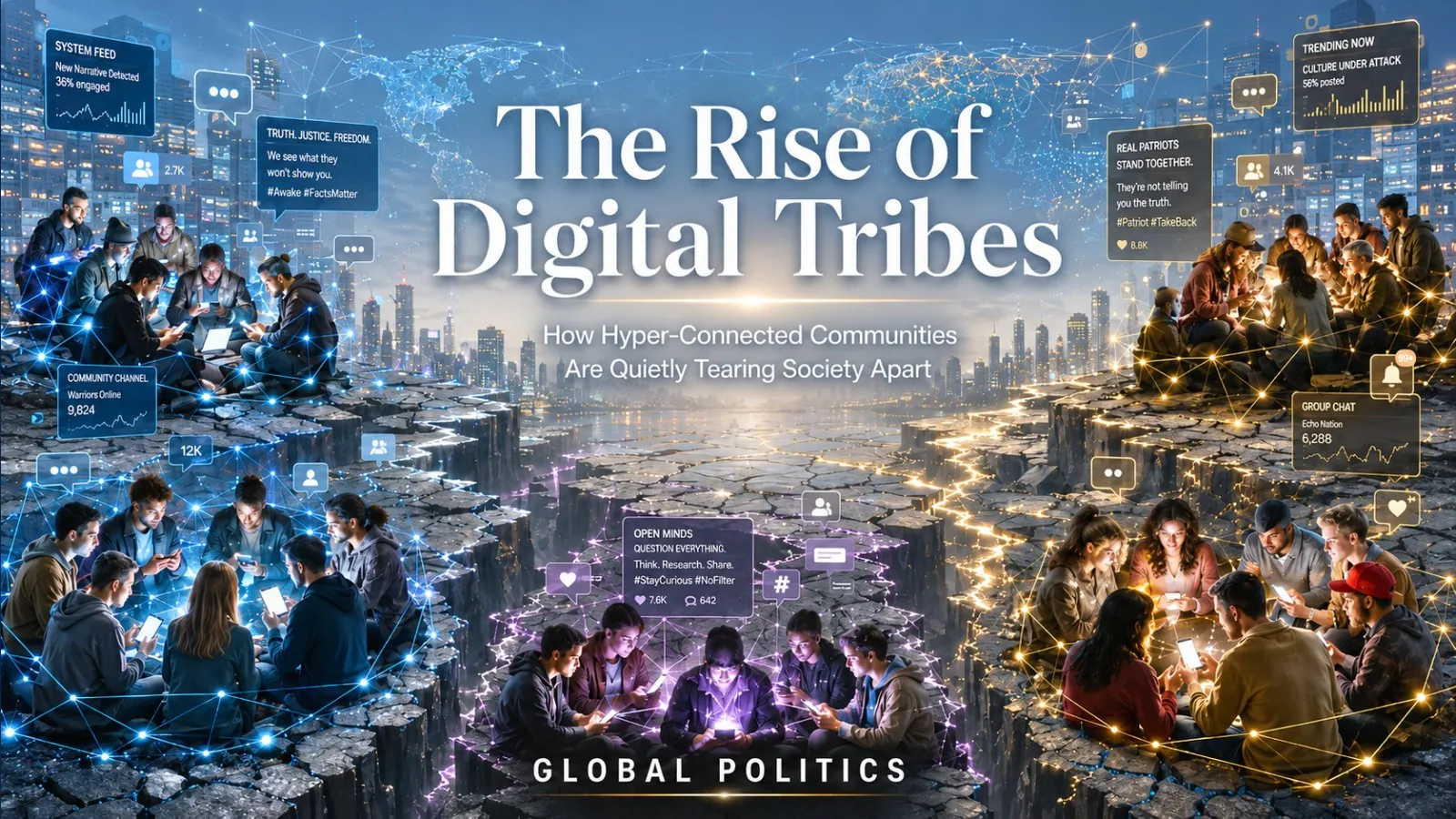
The Rise of Digital Tribes: How Hyper-Connected Communities Are Quietly Tearing Society Apart
Digital tribes, forged in online spaces, unite millions by shared interests and identities but also deepen social fractures. This article explores how
June 19, 2026
The Rise of Digital Tribes: How Hyper-Connected Communities Are Quietly Tearing Society Apart
Digital tribes, forged in online spaces, unite millions by shared interests and identities but also deepen social fractures. This article explores how