
What If Every Decision Made Out of Fear Was Wrong? Rethinking How We Choose
This article examines how fear often unconsciously drives everyday decisions, leading to missed opportunities and subtle regrets, and suggests shifting toward value-based choices through self-reflection, small acts of courage, and tolerance of discomfort to foster personal growth and fulfillment.
Explore the invisible role of fear in everyday choices, the hidden costs of playing it safe, and what it might mean to shift toward value-driven decisions.
decision-making fear personal growth lifestyle values regret
Many of our choices claim to be practical—but could fear be quietly steering more than we realize?
Understanding Fear Decisions Versus Value Decisions
Understanding Fear Decisions Versus Value Decisions
When was the last time you faced a fork in the road, big or small? Perhaps you decided not to apply for a dream job, stayed silent during a disagreement, left a message unsent, or skipped trying something new. Many of these moments pass unnoticed, quickly rationalized as common sense or practicality. But what if, beneath the surface, fear was quietly steering your choices?
To unpack this, let’s consider two broad categories of decision-making:
Value Decisions: Choices anchored by what matters to you or who you aspire to be. Examples include signing up for dance lessons purely for joy or having an honest conversation because you value the relationship, even if it might be awkward.
Fear Decisions: Choices shaped primarily by the desire to avoid discomfort, judgment, rejection, or uncertainty. Examples include holding back on expressing yourself, avoiding big moves or risks, or sticking with routines that no longer serve you out of caution.
The tricky part: fear has a knack for masquerading as level-headed reasoning. “I won’t try that hobby—I’d probably be terrible at it.” “It’s smarter to keep my head down at work—I don’t want to risk standing out.” Sometimes these are practical choices; other times, they’re evasions with invisible costs.
Human nature encourages risk aversion. We're wired to favor certainty and minimize threats, a tendency deeply rooted in our psychology. Yet, in modern life, the “threats” are rarely existential—their stakes often concern our sense of belonging, comfort, and self-image. Over time, these subtle decisions shape the contours of our lives.
The Hidden Costs of Living a Life Led by Fear
The Hidden Costs of Living a Life Led by Fear
What happens if the majority of our choices default to safety? The price is rarely immediate or catastrophic. More often, it’s quietly cumulative:
A Life That Feels Smaller Than You Are
From the outside, everything may look fine. But on the inside, there can be an undercurrent of frustration or longing—a sense that life is competent but underwhelming, much like wearing shoes a size too small and calling it “practical.”
A Confusing, Subtle Regret
It’s not the regret of bold mistakes, but a lingering uncertainty: “What if I’d actually tried?” The cumulative effect isn’t loud anguish but a quieter, persistent wondering about roads never taken.
A Wobbly Sense of Self
When fear considerations repeatedly govern your decisions, it can become harder to separate what you genuinely want from what you’re trying to avoid. Did you really want that stable career, or was it the guaranteed approval and lack of risk that tipped the scale? Even identities can blur, shaped not by positive choices, but by absence—by the things we never dared.
Psychological literature confirms that chronic avoidance—making choices to minimize distress—can limit resilience and lead to dissatisfaction. Over time, this can result not only in missed opportunities but also in a growing disconnect from one’s authentic desires and values. These small, self-protective decisions are rarely seen as dramatic errors, yet their aggregate impact is profoundly shaping.
Reclaiming Agency: How to Recognize and Shift Away from Fear-Based Choices
Reclaiming Agency: How to Recognize and Shift Away from Fear-Based Choices
If fear has been a quiet guide, what options exist for changing course? The first step is awareness: observing not just what choices you make, but why you make them. Am I acting to protect myself from discomfort, or am I moving toward something I truly value?
Practical strategies to make this shift include:
Self-Reflection and Journaling
Take time to ask, “What do I actually want here? What am I afraid might happen?” Writing about past and present decisions can uncover patterns. Over time, you may recognize where fear trumps value, and vice versa.
Building Courage in Small Steps
Choosing values over fear doesn’t necessarily require grand gestures. It can start with sending that honest text, trying a minor new activity, or voicing a small opinion. Courage isn’t the absence of fear, but the decision that something else matters more.
Seeking Stories of Change
Many people find inspiration in the journeys of others—individuals who moved past habitual caution to make changes, large or small. Their examples help normalize the uncomfortable process of stretching one’s comfort zone.
Learning to Tolerate Discomfort
Most fear-based decisions are bids to avoid temporary discomfort—awkwardness, embarrassment, risk. Practicing sitting with these feelings, rather than reflexively dodging them, can gradually increase your capacity for discomfort and make value-driven choices feel more accessible.
Psychologists and behavioral scientists argue that aligning actions with inner values, rather than short-term relief, predicts long-term fulfillment and resilience. By consciously distinguishing between fear-based and value-based motivations, people can slowly reclaim agency—even if some “wrong” moves are inevitable along the way.
Sitting With the Question—and Moving Forward
Sitting With the Question—and Moving Forward
“What if every decision I made out of fear was wrong?” This isn’t meant to paralyze or induce retroactive shame. Instead, it invites a different kind of reflection: If there’s a cost to always erring on the side of fear, what new possibilities open up if you start choosing a little braver, even a little less “safe”?
Few of us can escape fear entirely. It serves as a warning system and sometimes protects from real harm. The challenge lies in telling the difference between wise caution and self-limiting avoidance. That distinction, made habitually, shapes the arc of a life—often more than the grand “cinematic” decisions we recall most vividly.
So, where has fear quietly taken the wheel in your life? And what might shift if you let your values, not just your doubts, set the direction?
Debate Statement
Debate Statement
Using fear as a primary guide for everyday decision-making limits our potential for fulfillment and personal growth.
How much of your life has been shaped by fear—and what happens if you start choosing differently? Share your thoughts below.

🌍 How Countries Voted
See which countries are participating in this debate and where their votes currently lean.
Continue Reading
More Global Politics articles related to this topic.
 August 1, 2026
When Truth Has No Flag: How Contested Facts Heighten Global Social Pressure in 2026
In 2026, the battle over what is true is crossing borders and deepening divides worldwide. As facts become contested territory, societies face growing
August 1, 2026
When Truth Has No Flag: How Contested Facts Heighten Global Social Pressure in 2026
In 2026, the battle over what is true is crossing borders and deepening divides worldwide. As facts become contested territory, societies face growing
 July 28, 2026
The Illusion of Consensus on Ukraine in 2026: How Fake Engagement Shapes Global Opinion
Fake social media engagement creates a false sense of agreement on Ukraine-related issues worldwide. This digital deception distorts public opinion an
July 28, 2026
The Illusion of Consensus on Ukraine in 2026: How Fake Engagement Shapes Global Opinion
Fake social media engagement creates a false sense of agreement on Ukraine-related issues worldwide. This digital deception distorts public opinion an
 July 24, 2026
Hungary’s Rising Social Pressures Under Péter Magyar: Broken Promises and Growing Strains in 2026
Since taking office, Péter Magyar’s government has struggled to deliver on bold promises, deepening economic and social pressures in Hungary. From sta
July 24, 2026
Hungary’s Rising Social Pressures Under Péter Magyar: Broken Promises and Growing Strains in 2026
Since taking office, Péter Magyar’s government has struggled to deliver on bold promises, deepening economic and social pressures in Hungary. From sta
 June 19, 2026
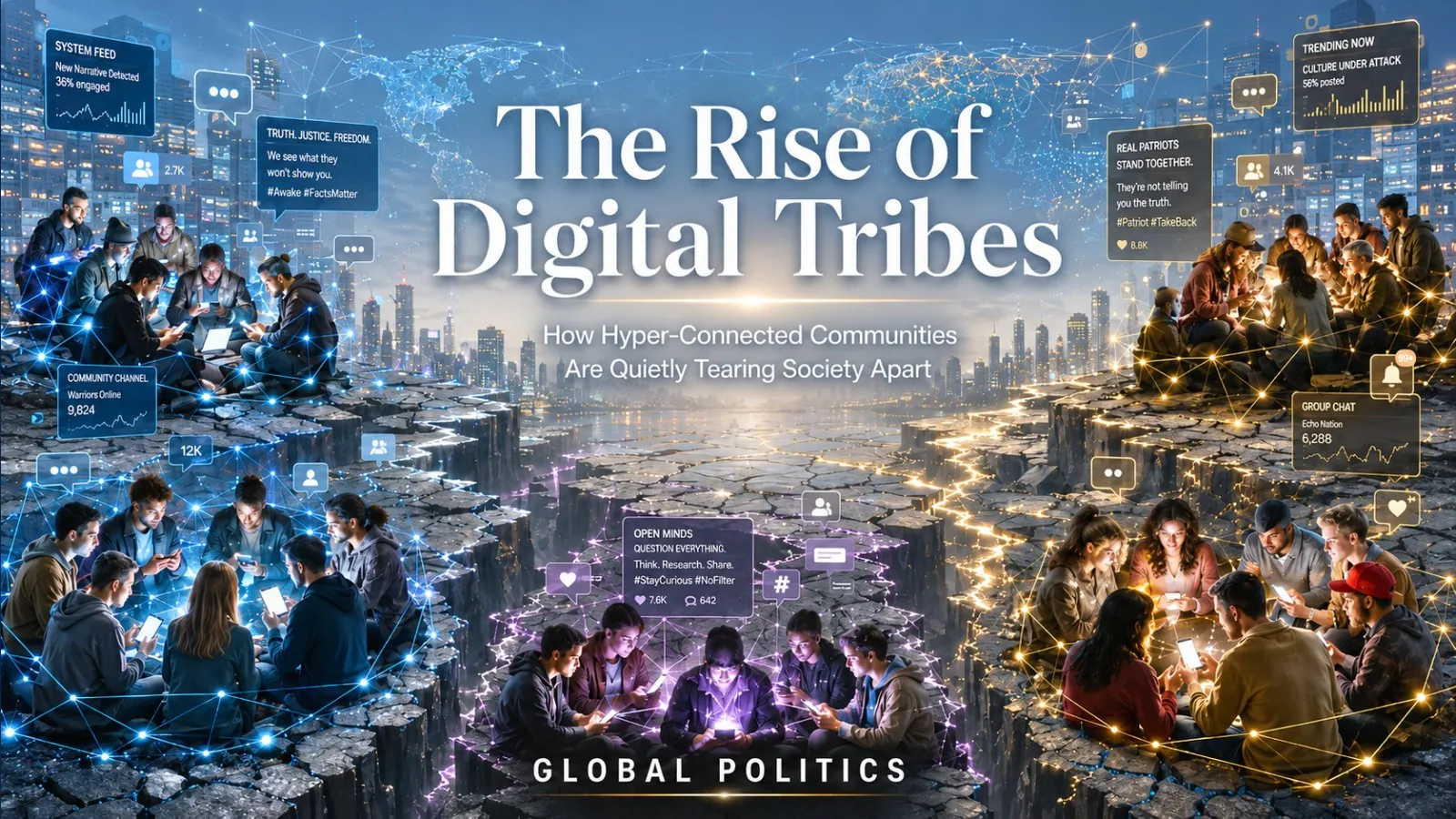
The Rise of Digital Tribes: How Hyper-Connected Communities Are Quietly Tearing Society Apart
Digital tribes, forged in online spaces, unite millions by shared interests and identities but also deepen social fractures. This article explores how
June 19, 2026
The Rise of Digital Tribes: How Hyper-Connected Communities Are Quietly Tearing Society Apart
Digital tribes, forged in online spaces, unite millions by shared interests and identities but also deepen social fractures. This article explores how