
The Resilience of Luxury Brands Amid Economic Uncertainty: Status, Social Media, and Shifting Consumer Values
Luxury fashion brands continue to grow globally despite inflation and economic uncertainty. This article explores the psychological and cultural factors behind this trend, including status signaling, influencer culture, and shifting consumer priorities across China, the Middle East, Europe, and the United States.
Luxury Consumption Defying Economic Patterns
Amid inflation and widespread economic uncertainty, luxury fashion and status brands continue to experience growth across global markets. This phenomenon challenges traditional economic assumptions that discretionary spending on high-end goods declines during downturns. Instead, luxury consumption endures as a powerful social marker and psychological refuge, offering consumers a sense of identity, exclusivity, and control amid broader instability.
The Psychology of Status Symbols and Aspirational Lifestyles
At the core of luxury’s resilience is the psychology of status signaling. Luxury goods serve as symbolic capital—visible demonstrations of success, wealth, and social differentiation. In times of uncertainty, acquiring luxury items can be a form of self-reassurance and social assertion. Aspirational lifestyles promoted by celebrities and influencers further intensify this dynamic, intertwining luxury with ideals of achievement and desirability. This relationship is particularly potent in cultures where visible success is culturally emphasized.
Influencer Culture and the Social Media Effect
Social media platforms have transformed how luxury brands engage with consumers and how status is communicated. Influencers, celebrities, and ordinary users showcase luxury items as badges of aspiration and belonging. The visual and interactive nature of platforms like Instagram, TikTok, and WeChat amplifies luxury’s appeal, creating communities around brands and lifestyle narratives. This digital visibility helps brands tap into younger demographics who value social validation.
Global Market Nuances: China, Middle East, Europe, and the United States
Luxury consumption patterns vary by region but share common drivers. In China, luxury buying has surged as a symbol of rising middle-class prosperity and global connectedness. The Middle East’s wealthy elite often view luxury as a marker of prestige and cultural cosmopolitanism, bolstered by regional wealth concentration. European consumers uphold heritage and craftsmanship values but also see luxury as an investment, while in the United States, luxury intersects with cultural diversity and social media-driven trends.
Reflecting Inequality or Emerging Priorities?
The sustained luxury boom raises critical questions about social inequality and changing consumer values. On one hand, luxury consumption visibly underscores the widening wealth gap, highlighting disparities in economic opportunity. On the other hand, shifting cultural priorities—such as a focus on exclusivity, craftsmanship, and curated experiences—may reflect a more complex redefinition of value that transcends simple materialism. These trends suggest luxury culture cannot be reduced to economic inequality alone but must be understood within broader social and cultural transformations.

🌍 How Countries Voted
See which countries are participating in this debate and where their votes currently lean.
Continue Reading
More Global Politics articles related to this topic.
 July 24, 2026
How the Ukraine-Russia War Has Boosted US Money Power by 2026: Unexpected Gains and Growing Risks
The Ukraine-Russia war has reshaped US economic and strategic power by 2026. From surging energy exports to growing defense contracts, America’s finan
July 24, 2026
How the Ukraine-Russia War Has Boosted US Money Power by 2026: Unexpected Gains and Growing Risks
The Ukraine-Russia war has reshaped US economic and strategic power by 2026. From surging energy exports to growing defense contracts, America’s finan
 June 18, 2026
Russia-India Rare Earths Pact: A Geopolitical Game-Changer in the Shadow of China’s Dominance
The Russia-India agreement on rare earth elements could challenge China’s global dominance in critical minerals, shifting technological and geopolitic
June 18, 2026
Russia-India Rare Earths Pact: A Geopolitical Game-Changer in the Shadow of China’s Dominance
The Russia-India agreement on rare earth elements could challenge China’s global dominance in critical minerals, shifting technological and geopolitic
 June 15, 2026
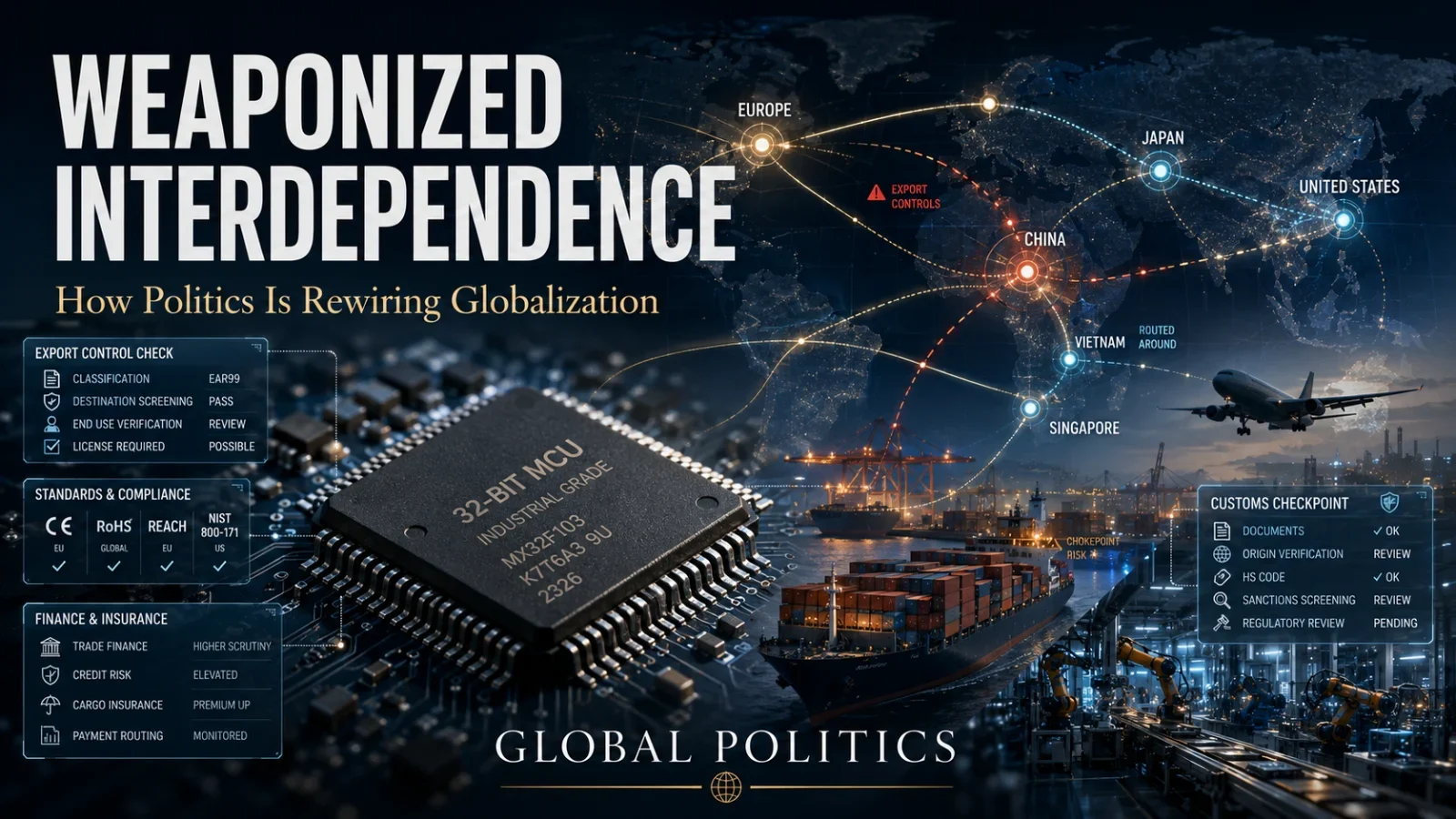
The Weaponization of Economic Interdependence: How States Are Rewiring Globalization
The article examines how states are transforming economic interdependence into strategic leverage by controlling key nodes in technology, finance, and
June 15, 2026
The Weaponization of Economic Interdependence: How States Are Rewiring Globalization
The article examines how states are transforming economic interdependence into strategic leverage by controlling key nodes in technology, finance, and
 June 13, 2026
The Global Race for Critical Minerals: Who Controls the Resources Powering the Green Revolution?
The scramble for lithium, cobalt, and rare earth elements has become a defining geopolitical contest of the 21st century. As nations strive for energy
June 13, 2026
The Global Race for Critical Minerals: Who Controls the Resources Powering the Green Revolution?
The scramble for lithium, cobalt, and rare earth elements has become a defining geopolitical contest of the 21st century. As nations strive for energy