G7 Leaders Face a World of Linked Crises: Ukraine, Iran, Energy, AI, and Global Security
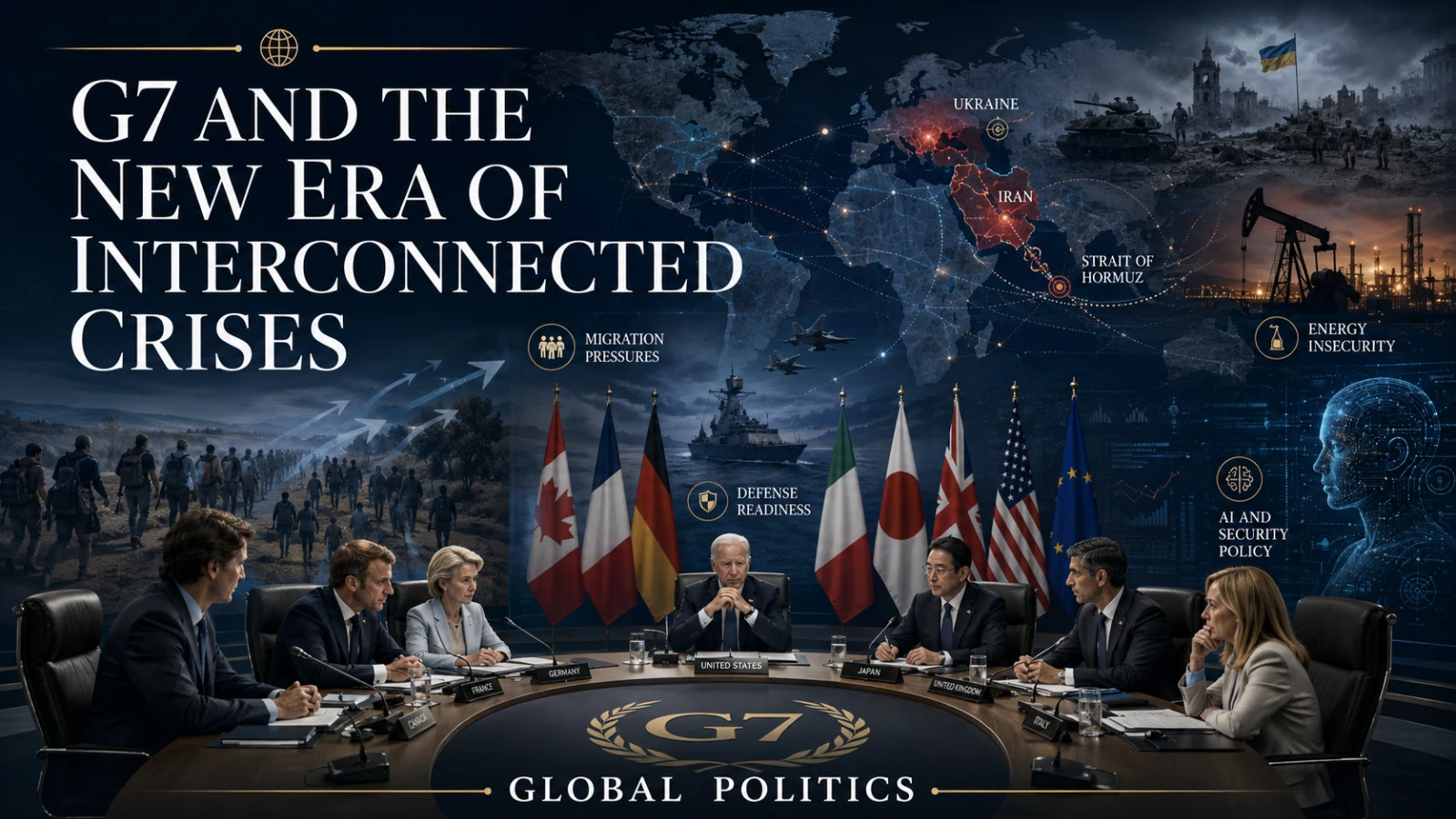
The latest G7 summit showed how today’s global crises are no longer separate issues. War, energy security, migration, artificial intelligence, and defense policy are increasingly connected, forcing world leaders to manage instability on several fronts at once.
The latest G7 summit highlighted the increasing complexity of global politics. Leaders are no longer addressing one major crisis at a time; instead, they must manage several interconnected challenges simultaneously: the war in Ukraine, tensions with Iran, energy insecurity, migration pressures, defense readiness, and the expanding role of artificial intelligence in security policy.
Ukraine remained a central focus. Western leaders continue to grapple with how to support Kyiv while keeping diplomatic channels with Russia open. Any peace discussion is complicated by the fact that Ukraine’s sovereignty, Europe’s security, and NATO’s credibility are all intertwined. A weak settlement could encourage further aggression, yet a prolonged war carries significant human, economic, and political costs.
Iran was another key concern. Tensions in the Middle East affect far more than the countries directly involved; they impact oil markets, shipping routes, inflation, and the security calculations of Gulf states, Europe, Asia, and the United States. The Strait of Hormuz remains one of the world’s most critical energy chokepoints, so even the threat of disruption can influence global markets.
Energy and immigration also emerged as major political pressure points. European governments continue to balance climate commitments, affordable energy, industrial competitiveness, and public concerns over migration. These debates are not merely technical or economic; they shape elections, public trust, and governments’ ability to maintain stable foreign policy positions.
A newer but increasingly significant issue is artificial intelligence. AI is no longer just a business or technology topic; it has become a security, military, and governance issue. The presence of AI leaders at high-level political discussions indicates that governments are beginning to recognize how artificial intelligence may affect defense systems, cyber threats, misinformation, economic competition, and public administration.
The most important takeaway from the summit is that global politics is now deeply interconnected. A military crisis can trigger an energy crisis. An energy crisis can lead to inflation. Inflation can spark political instability. Meanwhile, new technologies like AI may accelerate both cooperation and conflict.
For ordinary citizens, these meetings may seem distant and symbolic. However, decisions made by major powers influence prices, security, migration policies, military spending, and the information environment people experience daily. While the G7 cannot solve every global problem, it remains a key forum where the world’s richest democracies coordinate their responses to instability.
The real question is whether these leaders can move beyond short-term crisis management. If they only react to each emergency as it arises, global instability will continue to grow. But if they approach these issues as interconnected, they may have a better chance of building a more stable international order.

🌍 How Countries Voted
See which countries are participating in this debate and where their votes currently lean.
Continue Reading
More Global Politics articles related to this topic.
 May 31, 2026
Urban Farming Networks: Can Local Food Systems Drive Resilient Cities?
As global cities grapple with food insecurity and supply chain shocks, urban farming networks are sparking debate. Can hyper-local food systems meanin
May 31, 2026
Urban Farming Networks: Can Local Food Systems Drive Resilient Cities?
As global cities grapple with food insecurity and supply chain shocks, urban farming networks are sparking debate. Can hyper-local food systems meanin
 August 7, 2026
The West’s Moral Makeover: Can It Overcome Its Colonial Legacy by 2026?
The West’s transformation from colonial empires to global moral leaders faces rising challenges. Its claims to moral authority spark debates over hist
August 7, 2026
The West’s Moral Makeover: Can It Overcome Its Colonial Legacy by 2026?
The West’s transformation from colonial empires to global moral leaders faces rising challenges. Its claims to moral authority spark debates over hist
 August 2, 2026
Elon Musk’s Call to End Ukraine’s Forever War: Risks, Stakes, and Global Reactions
Elon Musk has challenged the prevailing push for prolonged military aid to Ukraine by urging a negotiated peace. His stance shines a spotlight on the
August 2, 2026
Elon Musk’s Call to End Ukraine’s Forever War: Risks, Stakes, and Global Reactions
Elon Musk has challenged the prevailing push for prolonged military aid to Ukraine by urging a negotiated peace. His stance shines a spotlight on the
 August 1, 2026
When Truth Has No Flag: How Contested Facts Heighten Global Social Pressure in 2026
In 2026, the battle over what is true is crossing borders and deepening divides worldwide. As facts become contested territory, societies face growing
August 1, 2026
When Truth Has No Flag: How Contested Facts Heighten Global Social Pressure in 2026
In 2026, the battle over what is true is crossing borders and deepening divides worldwide. As facts become contested territory, societies face growing