
The Decline of Cash and the Rise of Digital Payments: A Global Shift with Complex Implications
Several countries are rapidly transitioning from physical cash to digital payment systems, shaping daily life, commerce, and governance globally. This article explores developments across China, Europe, the United States, and Scandinavia, analyzing benefits, challenges, and societal impacts.
Global Trends Toward Cashless Societies
Across the globe, cash is rapidly losing its dominance as digital payments become the preferred method for everyday transactions. In countries like China, mobile payment platforms such as Alipay and WeChat Pay have revolutionized retail, transportation, and even street vending, creating an ecosystem where physical currency is nearly redundant. Europe exhibits a mixed landscape: Nordic countries like Sweden and Denmark are leading the charge toward near-complete cashlessness, while southern European nations retain higher cash usage. The United States trails somewhat behind but is steadily increasing the adoption of digital payments through card networks and mobile wallets.
Government and Financial Institution Benefits
Governments and banks benefit from digital payment systems in significant ways. Digital transactions facilitate more efficient tax collection, reduce costs associated with printing and distributing cash, and help combat illicit economies by increasing transaction transparency. Banks gain from expanded opportunities for customer data collection, allowing tailored financial products and improved risk management. Central banks explore digital currencies (CBDCs) as potential tools for enhancing monetary policy and financial inclusion.
Privacy Concerns and Financial Surveillance
While digital payments offer convenience, they carry undeniable risks related to privacy and financial surveillance. Electronic transactions leave digital footprints, which governments and private companies can potentially monitor. In authoritarian contexts, this can translate into increased control over citizens’ financial activities. Even in democracies, concerns persist about data security, third-party data sharing, and the erosion of anonymous exchange methods intrinsic to cash. These privacy issues fuel debates over the societal cost of a fully cashless future.
Impact on Tourism, Small Businesses, and Older Generations
The shift away from cash affects various social groups differently. Tourists often rely on cash for convenience and to avoid international payment fees; countries moving toward cashlessness may inadvertently create barriers to tourism. Small businesses sometimes struggle with electronic payment fees and technology adoption, which can threaten their economic viability. Older populations, less adept with digital technologies or lacking access to smartphones and bank accounts, risk financial exclusion in environments dominated by digital payments. Policymakers increasingly recognize the need for inclusive solutions as societies transition.
Looking Ahead: Balancing Efficiency and Rights
The movement toward cashless societies is accelerating but remains uneven and controversial. Striking a balance between leveraging technological efficiency, ensuring financial system integrity, and upholding privacy rights is a nuanced challenge. The debate over whether cash should remain a protected public right is central to shaping future regulatory frameworks and the design of digital payment infrastructure worldwide.

🌍 How Countries Voted
See which countries are participating in this debate and where their votes currently lean.
Continue Reading
More Global Politics articles related to this topic.
 July 24, 2026
How the Ukraine-Russia War Has Boosted US Money Power by 2026: Unexpected Gains and Growing Risks
The Ukraine-Russia war has reshaped US economic and strategic power by 2026. From surging energy exports to growing defense contracts, America’s finan
July 24, 2026
How the Ukraine-Russia War Has Boosted US Money Power by 2026: Unexpected Gains and Growing Risks
The Ukraine-Russia war has reshaped US economic and strategic power by 2026. From surging energy exports to growing defense contracts, America’s finan
 June 18, 2026
Russia-India Rare Earths Pact: A Geopolitical Game-Changer in the Shadow of China’s Dominance
The Russia-India agreement on rare earth elements could challenge China’s global dominance in critical minerals, shifting technological and geopolitic
June 18, 2026
Russia-India Rare Earths Pact: A Geopolitical Game-Changer in the Shadow of China’s Dominance
The Russia-India agreement on rare earth elements could challenge China’s global dominance in critical minerals, shifting technological and geopolitic
 June 15, 2026
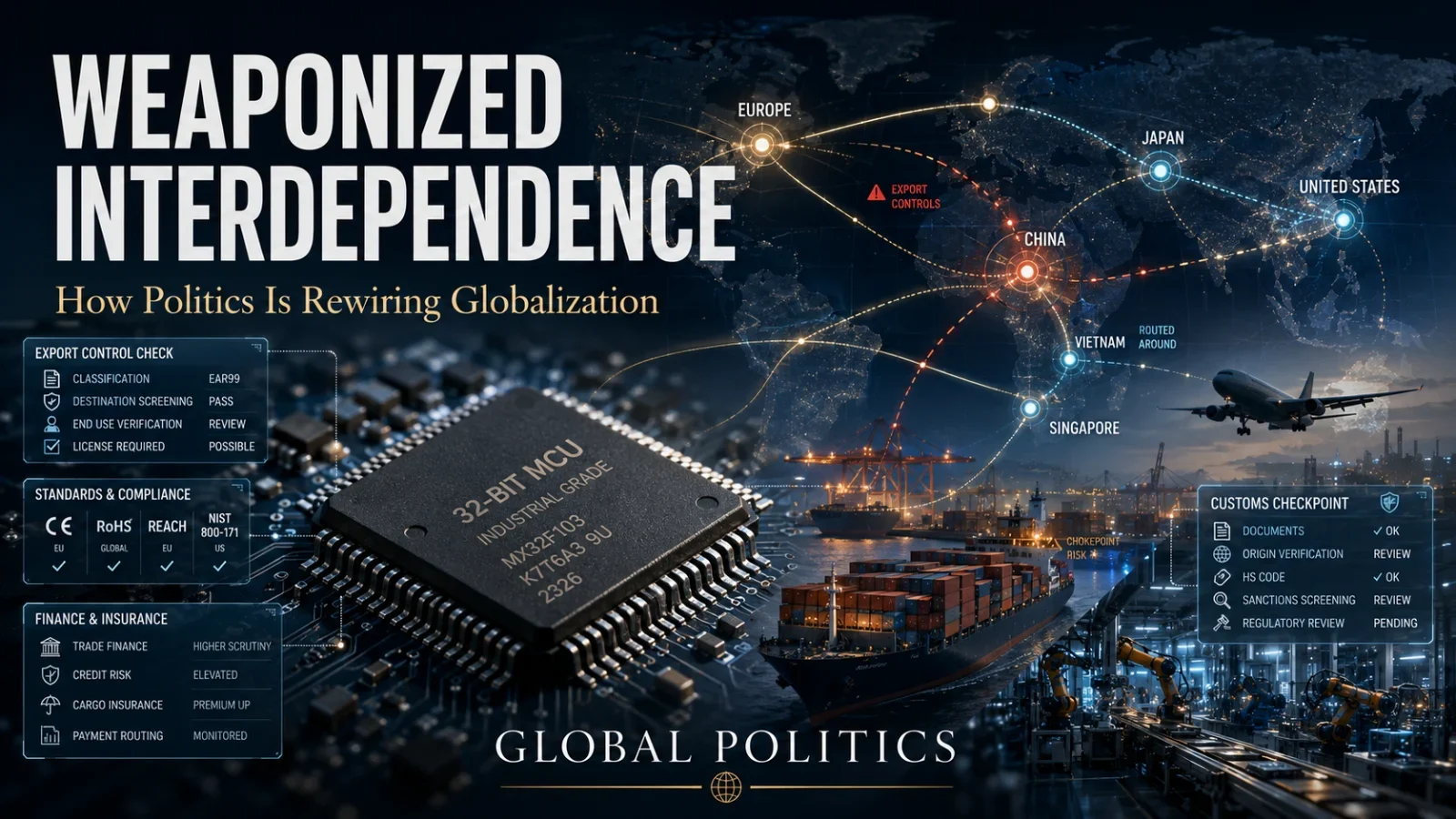
The Weaponization of Economic Interdependence: How States Are Rewiring Globalization
The article examines how states are transforming economic interdependence into strategic leverage by controlling key nodes in technology, finance, and
June 15, 2026
The Weaponization of Economic Interdependence: How States Are Rewiring Globalization
The article examines how states are transforming economic interdependence into strategic leverage by controlling key nodes in technology, finance, and
 June 13, 2026
The Global Race for Critical Minerals: Who Controls the Resources Powering the Green Revolution?
The scramble for lithium, cobalt, and rare earth elements has become a defining geopolitical contest of the 21st century. As nations strive for energy
June 13, 2026
The Global Race for Critical Minerals: Who Controls the Resources Powering the Green Revolution?
The scramble for lithium, cobalt, and rare earth elements has become a defining geopolitical contest of the 21st century. As nations strive for energy