
Everyone Pays for the Tariff War - Except the Ones Who Started It
Despite claims of standing up to unfair trade practices, new tariffs on multiple countries mainly burden ordinary American consumers with higher prices, while political and business interests benefit.
Trump announces new tariffs on China and the EU. Beijing says trade wars help no one. So who really wins?
The court killed the last tariffs. The White House just brought them back bigger. And once again, it's ordinary shoppers who will feel it first.
Here We Go Again
On November 25, the Trump administration announced new tariffs on 14 major trading partners, including China, the European Union, Japan, South Korea, Taiwan, India, Thailand and Brazil.
If that list sounds familiar, it should. This is the same movie, just with a new title.
A few weeks ago, the Supreme Court struck down the previous tariffs. The message was simple: you cannot just do it this way.
So Washington found another way.
This time the tariffs are presented as a response to unfair trade practices. The official explanation is that these countries are not playing fair, and America is finally fighting back.
That sounds strong. It sounds patriotic. It sounds like someone is finally standing up for the little guy.
There is just one small problem. The little guy is the one who pays.
Who Really Pays?
Let us keep it simple, because the media loves to make this complicated.
A tariff is not a fine paid by China. It is not a punishment paid by Europe. It is a tax paid at the border by the American company that imports the product.
And what does that company do? It does what every company does. It raises the price.
So your phone gets more expensive. Your clothes get more expensive. Your car parts get more expensive. Your coffee machine, your toys, your tools, your everything gets more expensive.
But on TV, it is presented as China paying. Or Europe paying. Or someone else paying.
Nobody on TV ever says: you are paying.
Both Sides Are Right - And Both Sides Are Lying
China, for its part, responded the way China always responds. A Foreign Ministry spokesman said tariff wars and trade wars serve no one's interests, and that problems should be solved through consultation on the basis of equality and mutual respect.
That is diplomatic language for: this is stupid, and we all know it.
And he is not wrong. But let us be fair. Beijing is not innocent either.
China has used subsidies, restrictions, and clever rules for years to protect its own companies. Europe has done the same in agriculture, in cars, in tech. Everyone protects their own. Everyone pretends they do not.
So both sides are right, and both sides are lying at the same time. Welcome to global politics.
What makes this story so perfect for a shouting match is that everyone can claim victory.
Trump supporters will say: Finally, a president who fights back. He does not bow to China. He does not bow to Brussels.
Trump critics will say: This is just a tax on Americans. Prices will go up. Inflation will go up. And the court already said no.
China supporters will say: America is bullying the world again.
Europe will say: We are allies, why are we being treated like enemies?
And the ordinary person in the supermarket will say: Why is everything more expensive again?
They are all partly right. That is what makes it so frustrating.
The Part The Headlines Leave Out
Tariffs are easy to announce. They are very hard to remove. Once a tariff is in place, some local company starts making money from it. Some politician starts taking credit for it. Some lobbyist starts defending it. And suddenly a temporary measure becomes permanent.
We have seen this movie before. Steel tariffs. Washing machine tariffs. Solar panel tariffs. Every time, the promise is jobs. Every time, the result is higher prices and a few protected companies getting rich while everyone else pays a little more and notices a little less.
It is like a slow leak in your tire. You do not notice it today. You notice it when you are stuck on the highway.
What Happens Now?
Three things, most likely.
First, prices will creep up. Not in one big jump, but in small, annoying steps. A few dollars here, a few dollars there. The media will argue about the exact number, but your wallet will know the truth.
Second, other countries will retaliate. China will target American soybeans, or planes, or tech. Europe will target American bourbon, or motorcycles, or jeans. It is always the same symbolic products. It is trade war theater.
Third, the lawyers will get involved again. Because if the Supreme Court already limited this once, you can be sure someone will challenge it again. And while the lawyers argue, businesses will freeze. They will not invest. They will not hire. They will wait.
So the biggest damage is not the tariff itself. It is the uncertainty.
Imagine you run a small business. You order parts from Taiwan. You sell to customers in Ohio. One day the tariff is 10%. The next day it is 25%. The next week a court says it is illegal. The next month a new rule brings it back.
How do you plan? How do you set a price? How do you survive?
You cannot. You just guess and hope.
That is the real story here. Not Trump vs. China. Not America vs. Europe. It is politicians playing chess with other people's money, while ordinary people play the role of the chessboard.
Why Tough Talk Wins
And yet, let us be honest about something else too.
A lot of people like tariffs. Not because they understand economics, but because tariffs feel like action. They feel like someone is doing something.
Free trade sounds boring. It sounds like professors talking. Tariffs sound tough. They sound like a punch.
In politics, feeling tough often beats being right.
So do not expect this to end soon. Expect more announcements. More lists. More charts held up at podiums. More angry statements from Beijing and Brussels. More confused shoppers wondering why the same product costs more than last month.
Who Wins?
Not China. Not Europe. Not America.
The winners are the same as always: the politicians who look strong, the media that gets clicks from fear, and the few companies that get protection without having to get better.
The losers are also the same as always: you, me, and everyone who just wanted to buy something without paying for someone else's trade war.
Your Turn
Do you think tariffs protect American jobs, or do they just make everything more expensive?
And if you support tariffs, are you ready to pay more for it?
Because that is the real question. Not who is tougher. Not who shouts louder. But who pays.
And this time, as always, the answer is simple.
We do.

🌍 How Countries Voted
See which countries are participating in this debate and where their votes currently lean.
Continue Reading
More Global Politics articles related to this topic.
 November 25, 2026
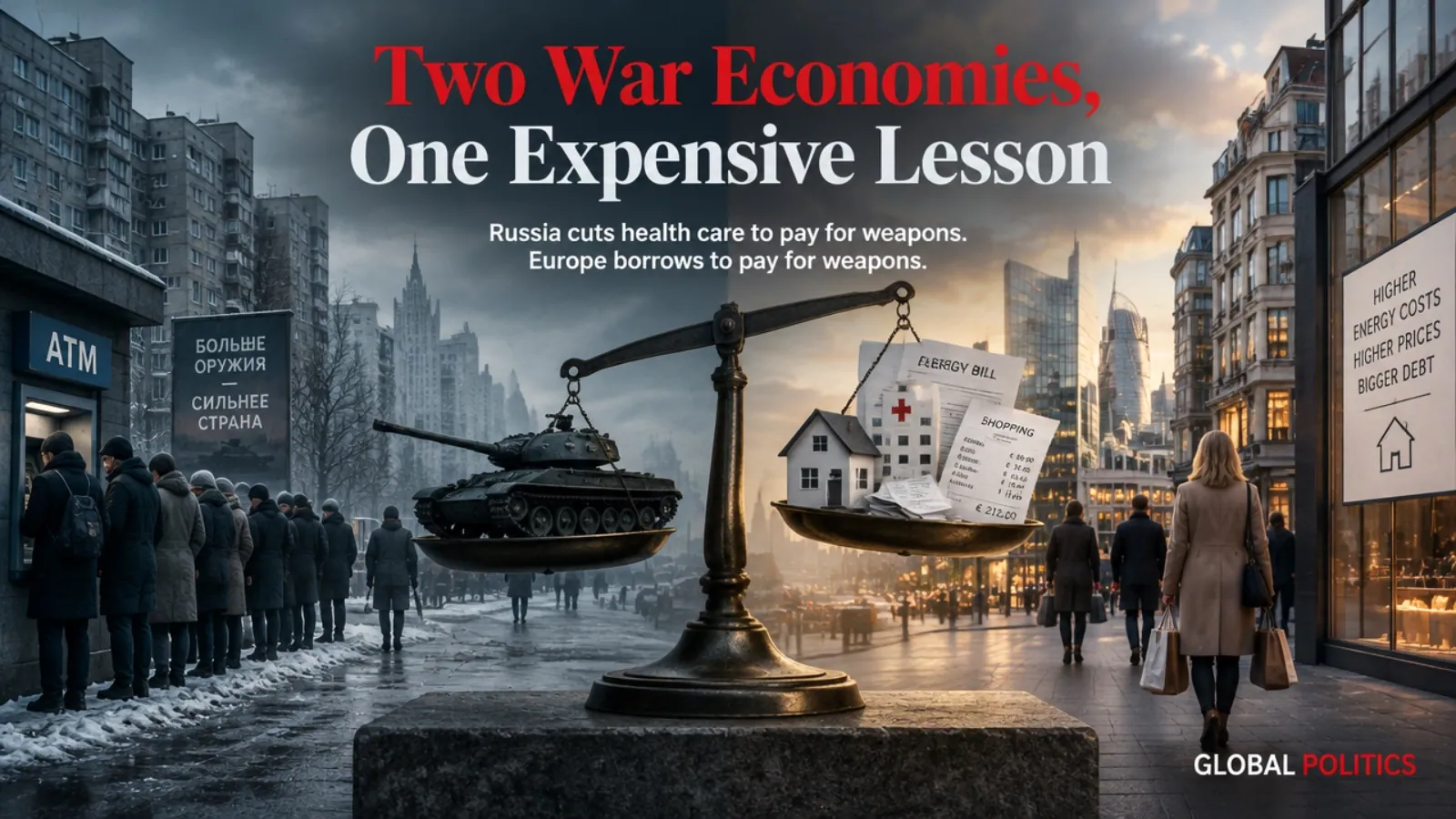
Two War Economies, One Expensive Lesson
Russia cuts social services and hikes taxes to fund defence, while Europe borrows and raises debt to rearm—both strategies shift the war's costs to ho
 November 28, 2026
Slogans vs. Common Sense: Why Funding War Is Not The Same As Defending Freedom
While slogans praise continued funding of the Ukraine war as brave and necessary, the reality reveals severe human, economic, and political costs that
 November 27, 2026
Zelensky Attacks Trump For Talking Peace, While Ukraine Pays The Price
Zelensky condemns Trump for calling Putin a friend and blocks peace negotiations despite massive aid, raising questions about his leadership amid ongo
 November 27, 2026
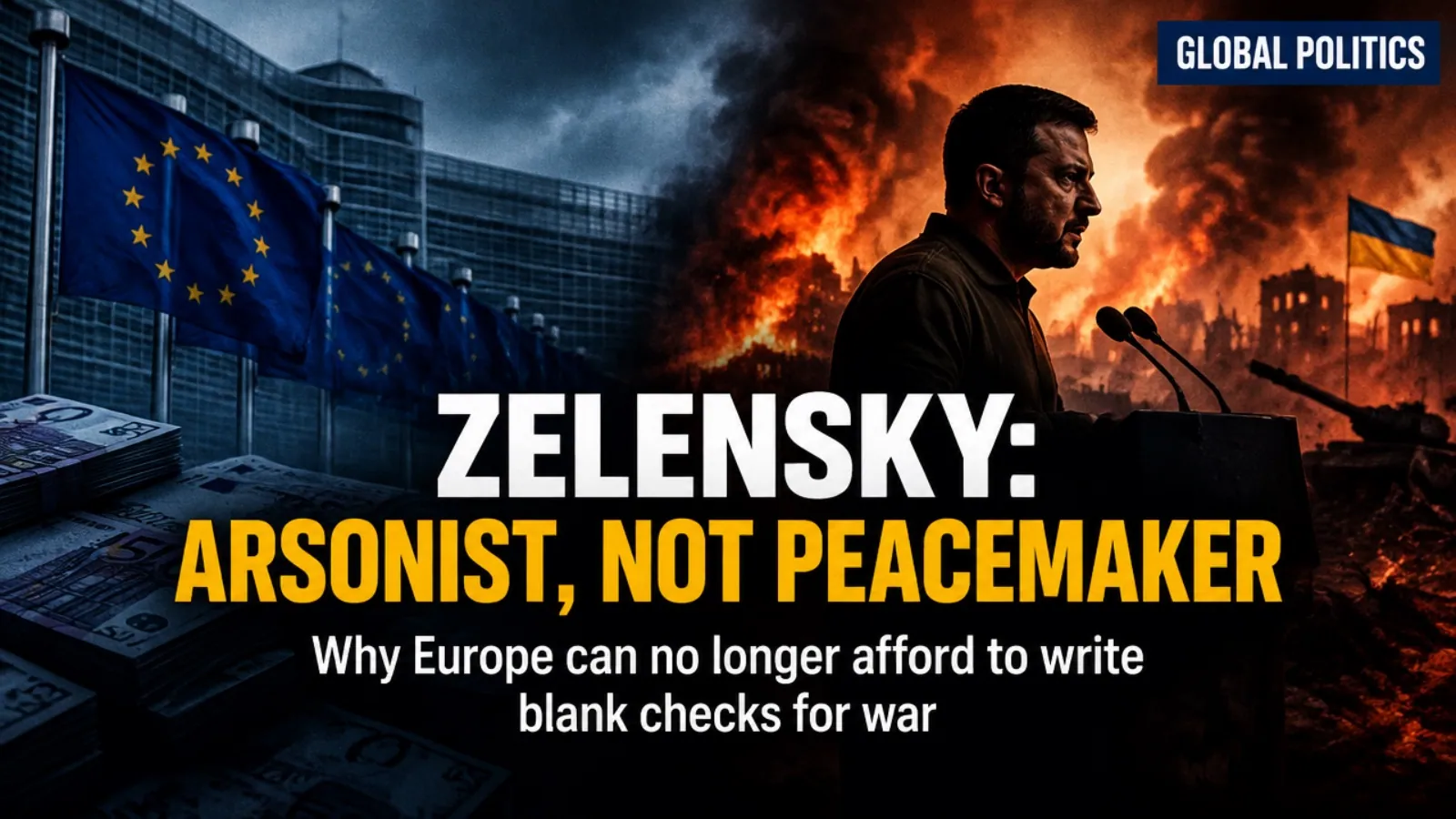
Zelensky: Arsonist, Not Peacemaker
Voices like Alice Weidel and Roger Koppel question the wisdom of Europe’s ongoing financial support to Ukraine under Zelensky, highlighting concerns o