

Slogans vs. Common Sense: Why Funding War Is Not The Same As Defending Freedom
While slogans praise continued funding of the Ukraine war as brave and necessary, the reality reveals severe human, economic, and political costs that challenge the wisdom of endless escalation.
The pro-war slogans sound brave. The pros and cons tell a different story.
There is a set of slogans you hear everywhere now. On TV, in parliament, on social media. They are repeated so often that questioning them feels like betrayal.
But slogans are not policy. Policy has costs, consequences, and alternatives. So let's do what adults are supposed to do: list the pros and cons, honestly, and ask the simple question — is funding an endless war really common sense, or is finding a way to peace common sense?
The Slogans
You know them by heart:
If you want peace, you want to surrender.
If you question the war, you love Russia.
Paying for weapons pays for itself.
The West is not escalating, only Russia is.
Europe is awake and strong.
Ukraine will fight forever, so Europe doesn't have to.
They sound brave. They fit on a poster. They get applause.
The problem is, none of them answer the only question that matters: what happens next?
The Pros of Aiding The War — Honestly Stated
Let's be fair. There are real arguments for military aid, and we should name them.
First, it helps Ukraine defend itself. Without weapons, Ukraine would be in a much weaker position. That is true.
Second, it signals to Russia that aggression has a price. Deterrence only works if it is credible.
Third, it buys time for Europe to rebuild its own defenses, which were neglected for 30 years.
Fourth, it keeps the war in Ukraine instead of spreading further. That is a real fear for countries near Russia.
These are not stupid arguments. They deserve to be taken seriously.
The Cons of Aiding The War — Honestly Stated
But every honest list has a second column. And this is the column the slogans try to hide.
First, the human cost. Ukraine is losing a generation. Men who cannot be replaced. Families torn apart. Millions who have left and may never return. A country cannot win if it runs out of people to defend it.
Second, the economic cost. Europe is paying with expensive energy, closing factories, rising debt, and angry voters. Germany is deindustrializing. Farmers are protesting. Small businesses are closing. This is not abstract. This is your electricity bill.
Third, the dependency cost. Ukraine does not survive on its own economy anymore. It survives on Western money and weapons. When that stops, the war stops. That is not independence. That is life support.
Fourth, the escalation cost. Every new weapons system, every strike deeper into Russia, every talk of weakening Russia moves us closer to a direct NATO-Russia confrontation. A war that was supposed to stay in Ukraine could become a war nobody can control.
Fifth, the democracy cost. When you cannot question war policy without being called a traitor, a Putin lover, or an enemy, you no longer have a debate. You have a choir. And choirs don't make good decisions.
The Myth That War Pays For Itself
One slogan deserves special attention because it is so dangerous: the idea that weapons pay for themselves.
They don't.
Afghanistan cost America over 2 trillion dollars. It did not pay for itself. Iraq did not pay for itself. Libya did not pay for itself.
In Europe, the war has not created prosperity. It has created profits for a small group of weapons manufacturers, mostly American, while ordinary Europeans pay higher prices for everything.
If war were a good investment, the countries that fight the most wars would be the richest and safest. They are not.
What Does Common Sense Actually Say?
Common sense is not pacifism. Common sense is not surrender.
Common sense says: If a war cannot be won on the battlefield after years of funding, you do not double down forever. You negotiate.
If your own continent is getting poorer, weaker, and more divided because of a war, you do not call that strength. You call that failure.
If your ally cannot survive without your money, you do not pretend it is winning. You help it find a way to survive without war.
If you are afraid of escalation, you do not keep escalating and hope the other side blinks first.
Peace is not giving up. Peace is the only way to stop the dying, rebuild Ukraine, rebuild Europe, and restore deterrence that is real — based on strong economies, strong borders, and strong diplomacy, not on endless shipments of shells.
The Real Choice
The choice is not between freedom and slavery. That is a slogan.
The real choice is between two kinds of courage.
The first kind is easy: keep chanting, keep paying, keep sending other people's sons to fight, and call it bravery.
The second kind is harder: admit the current path is not working, sit down, negotiate a settlement that stops the killing, secures Ukraine's future, gives Europe security guarantees, and lets Russia know the border is real.
The first kind feels good on TV. The second kind saves lives.
Common sense has always known which one is braver.
It is time for Europe to remember it.
🌍 How Countries Voted
See which countries are participating in this debate and where their votes currently lean.
Continue Reading
More Global Politics articles related to this topic.
 November 27, 2026
Zelensky Attacks Trump For Talking Peace, While Ukraine Pays The Price
Zelensky condemns Trump for calling Putin a friend and blocks peace negotiations despite massive aid, raising questions about his leadership amid ongo
 November 27, 2026
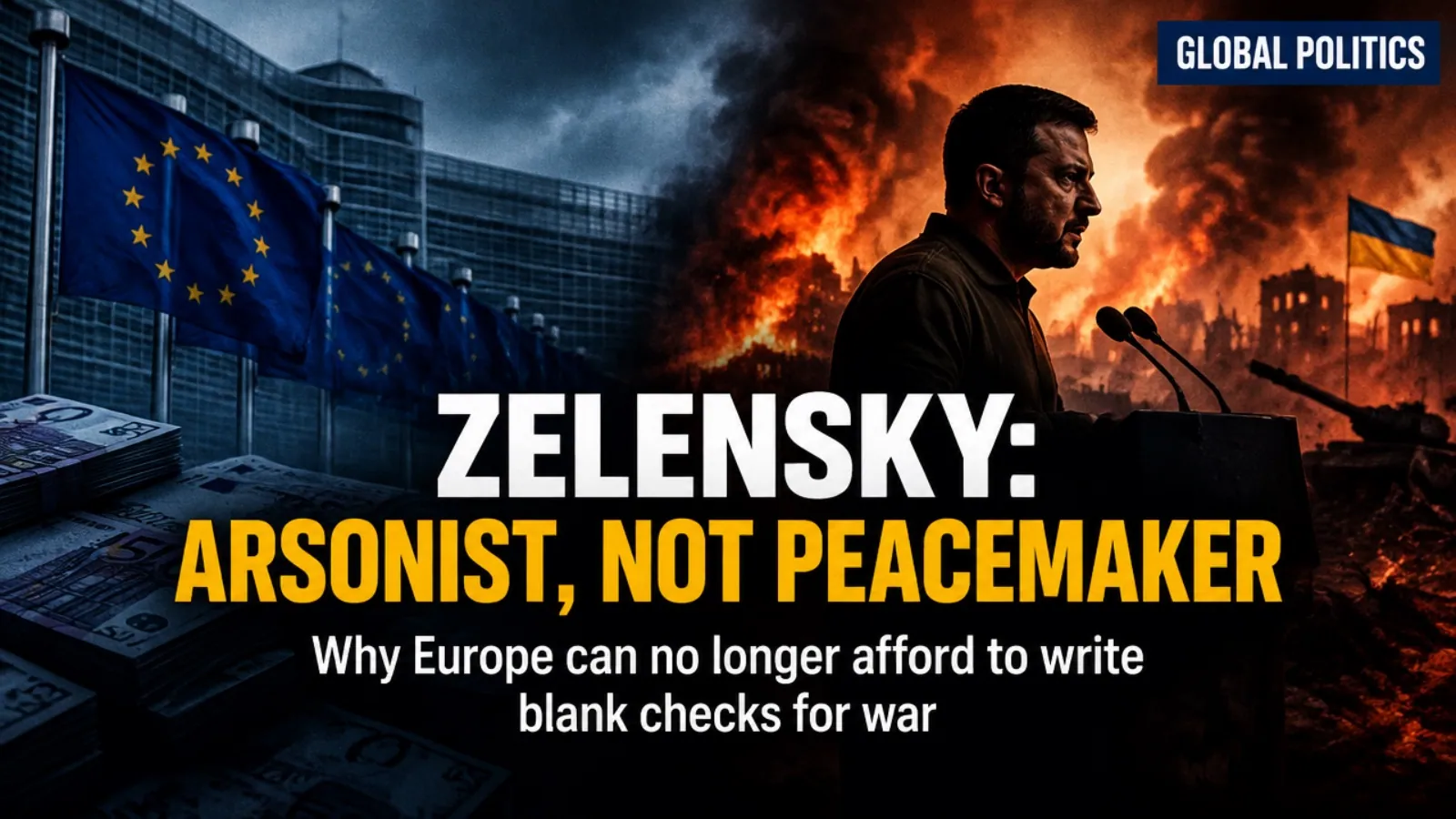
Zelensky: Arsonist, Not Peacemaker
Voices like Alice Weidel and Roger Koppel question the wisdom of Europe’s ongoing financial support to Ukraine under Zelensky, highlighting concerns o
 November 24, 2026
He Promised To Save Hungary. He Sold It To Brussels Instead.
Peter Magyar campaigned on promises of new, clean Hungarian politics but has since prioritized Ukraine and Brussels, neglecting Hungarian energy costs
 November 24, 2026
Boris Wants European Boots in Ukraine - Before Any Peace Deal
Boris Johnson advocates for European military presence in Ukraine now, despite Moscow's warnings and Europe’s reluctance, highlighting the tension bet