
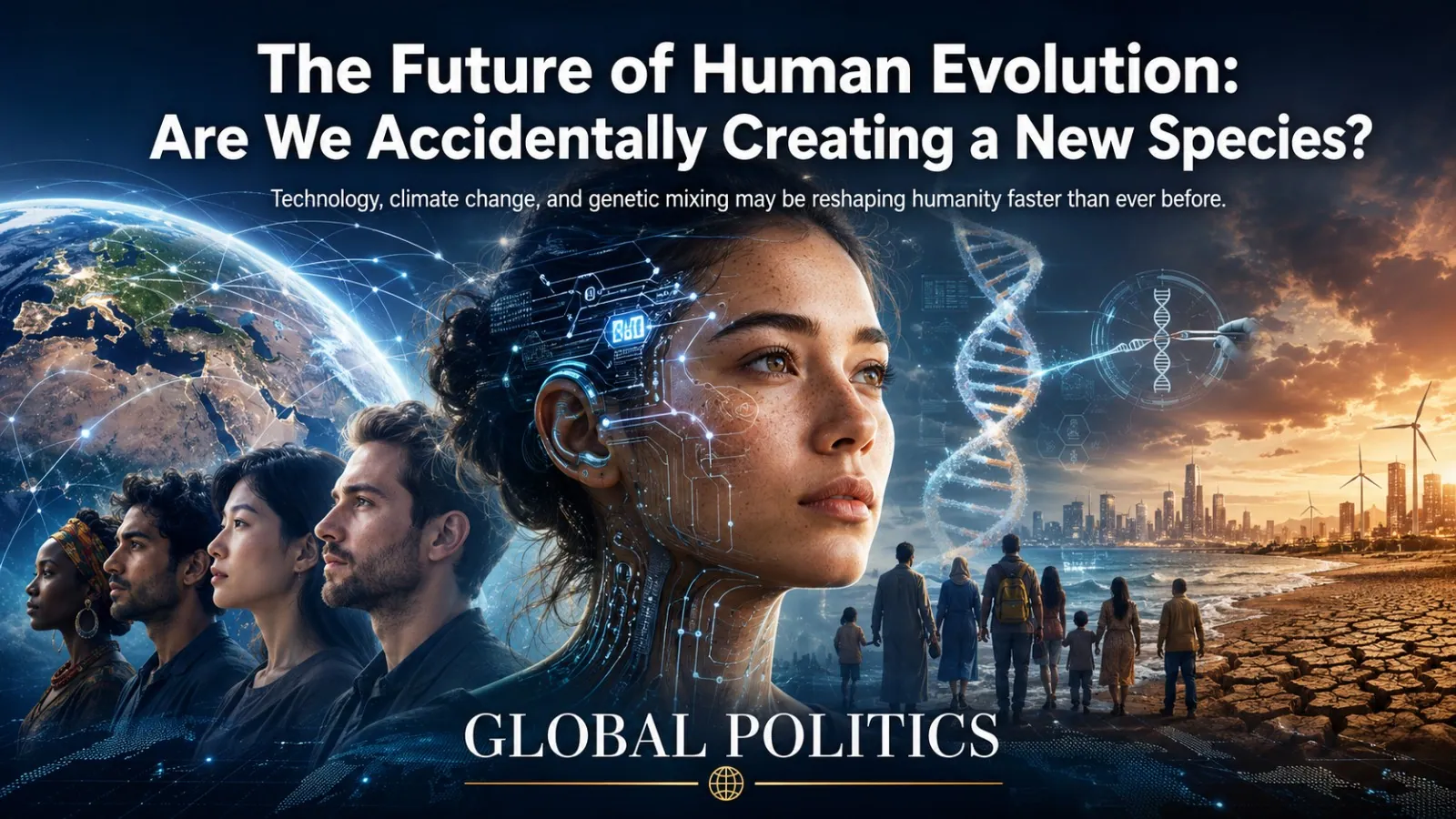
The Future of Human Evolution: Are We Accidentally Creating a New Species?
Contrary to long-held beliefs, human evolution is accelerating rapidly under the influence of technology, environment, and social change. This transformation raises profound questions about whether we are inadvertently creating a new human species shaped by machines, digital life, and climate pressures.
Rethinking Human Evolution in a Technological Age
For decades, the scientific consensus held that human evolution had essentially plateaued, with little significant genetic change occurring in modern societies. However, recent research reveals a startlingly different reality: humans are evolving at speeds not seen since the dawn of agriculture over 10,000 years ago. Yet this evolution is not being driven purely by the natural environment or random mutations — the main engines of biological change in the past. Instead, the forces propelling this rapid transformation are deeply intertwined with human technology, societal structures, and global environments.
These dynamics are rewriting traditional narratives about evolution, shifting the focus from slow natural processes to fast, technology-mediated adaptation.
Homo Techno: The Emergence of Human-Machine Hybrids
The line between biology and technology is blurring. Devices once relegated to the realm of science fiction—brain-computer interfaces, neural implants, AI-assisted cognition tools, and advanced prosthetics—are becoming commonplace enhancements for human capabilities. This convergence has led some experts to propose a new branch of humanity: Homo Techno. This concept envisions a species evolving not through genes alone but through direct integration with machines, forming hybrids that co-evolve with artificial intelligence and wearable technology.
This shift challenges the classical evolutionary timeline and raises questions about identity, autonomy, and the mechanisms of natural selection when technology accelerates human capabilities artificially rather than genetically.
Digital Life and Cognitive Evolution: The Rise of Homo Distractus
Beyond physical augmentation, the digital revolution is reshaping human cognition itself. Neuroscientists observe notable shifts in brain function and behavior:
- Reduced attention spans
- Enhanced pattern recognition
- Lower internal memory retention capacity
- Increased multitasking ability
- Elevated anxiety levels
This rewiring suggests a new cognitive model sometimes dubbed Homo Distractus, characterized by outsourcing memory and knowledge storage to digital devices and cloud systems. The implications reach far beyond individual behavior to societal communication patterns, learning processes, and psychological health.
Climate Change as a Driver of Physical Evolution
The drastic changes in Earth's climate are likewise molding the human body. Rising global temperatures are encouraging adaptations such as taller, slimmer frames optimized for heat dissipation and darker skin pigmentation to protect against increased ultraviolet radiation. Enhanced sweating efficiency and altered metabolism also reflect responses to environmental stressors.
Conversely, colder regions may see a resurgence of ancient evolutionary traits like shorter stature and stockier builds, reflecting adaptations to conserve heat. This ongoing biological adjustment underscores climate change’s profound influence not just on ecosystems but on human physiology itself.
Global Genetic Mixing and a New Human Diversity
The unprecedented scale of human migration and intercontinental mixing accelerates genetic diversity at a phenomenal rate. For the first time in history, isolated gene pools are blending rapidly, fostering potential increases in disease resistance and overall genetic resilience.
Looking centuries ahead, this global mixing may produce a more genetically uniform human population, with reduced physical differences between continents. This trend questions existing notions of race, ethnicity, and genetic heritage, while transforming the future landscape of human variation.
Designer Babies and Directed Evolution
Technological breakthroughs like CRISPR gene editing have brought humanity closer to directing its own evolution. The ability to modify genomes with precision presents ethical and social dilemmas. Designer babies—whose genetic traits are selected or altered—could accelerate changes in human characteristics far beyond natural evolutionary rates.
This technology poses critical questions about equity, unintended consequences, and the role of human choice in steering evolutionary trajectories.
Implications and the Path Forward
The accelerating pace of human evolution, mediated by technology, environment, and social change, presents a complex challenge. Are we witnessing the birth of a new species that transcends biology through technology, or are these changes extensions of human adaptability within our species’ existing framework? How societies regulate and integrate these changes will be crucial.
This evolutionary moment compels reflection on identity, ethics, governance, and the future of humanity. Understanding these themes invites a global conversation about how we define what it means to be human in the 21st century and beyond.

🌍 How Countries Voted
See which countries are participating in this debate and where their votes currently lean.
Continue Reading
More Global Politics articles related to this topic.
 June 23, 2026
What Galileo’s 58 Minutes Inside Jupiter Reveal About the Giant’s Hidden Secrets
The Galileo probe’s 1995 descent into Jupiter’s atmosphere gave us a brief but eye-opening view into the largest planet’s hidden layers. Its last 58 m
June 23, 2026
What Galileo’s 58 Minutes Inside Jupiter Reveal About the Giant’s Hidden Secrets
The Galileo probe’s 1995 descent into Jupiter’s atmosphere gave us a brief but eye-opening view into the largest planet’s hidden layers. Its last 58 m
 May 30, 2026
Scientists Are Freaking Out: The Earth Is Making a Noise No One Can Explain — And It’s Getting Louder
Scientists have detected a rising hum beneath the Earth's surface caused by human activity, a phenomenon now impacting both the planet's natural rhyth
May 30, 2026
Scientists Are Freaking Out: The Earth Is Making a Noise No One Can Explain — And It’s Getting Louder
Scientists have detected a rising hum beneath the Earth's surface caused by human activity, a phenomenon now impacting both the planet's natural rhyth
 May 29, 2026
Why Ultra-Processed Foods Are a Massive Human Experiment and What Science Is Really Telling Us
Ultra-processed foods now make up more than half of the calories in many modern diets. The science is still evolving, but one pattern keeps showing up
May 29, 2026
Why Ultra-Processed Foods Are a Massive Human Experiment and What Science Is Really Telling Us
Ultra-processed foods now make up more than half of the calories in many modern diets. The science is still evolving, but one pattern keeps showing up
 June 20, 2026
Why Cities Keep Sinking: The Science and Stakes of Urban Subsidence
Urban subsidence—where cities literally sink beneath our feet—is accelerating in many of the world's largest and most vulnerable metropolises. This ex
June 20, 2026
Why Cities Keep Sinking: The Science and Stakes of Urban Subsidence
Urban subsidence—where cities literally sink beneath our feet—is accelerating in many of the world's largest and most vulnerable metropolises. This ex